
Art Every Day · Painting stories
A painting is only
the beginning.
People, places, and small details that change the way you see. Explore 30 paintings through their stories, with a few things to look for in each one.
30 stories
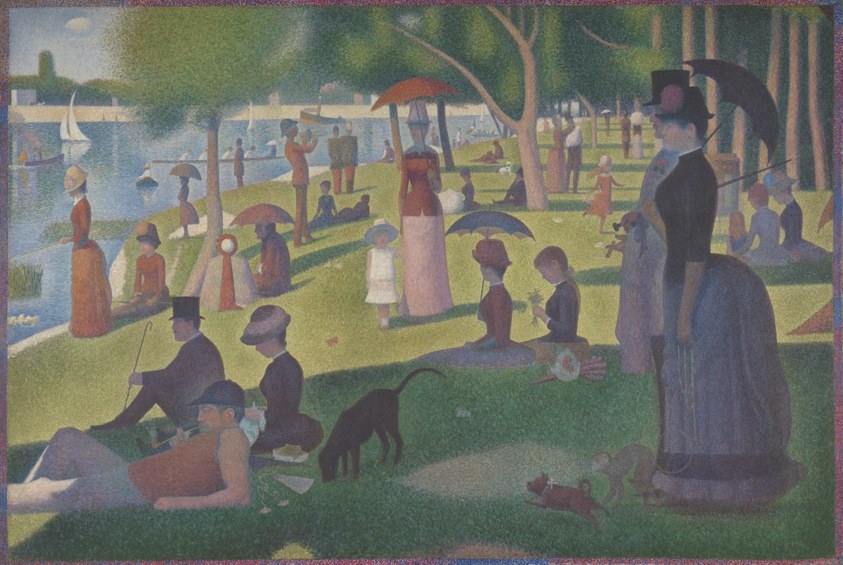
A Sunday on La Grande Jatte — 1884
Georges Seurat
Georges Seurat turned a Parisian afternoon beside the Seine into a carefully constructed modern monument. The figures look almost motionless, but their surfaces flicker with small touches of color. Years of studies and revisions lie behind the scene, including the late addition of the monkey at the right.
Read the story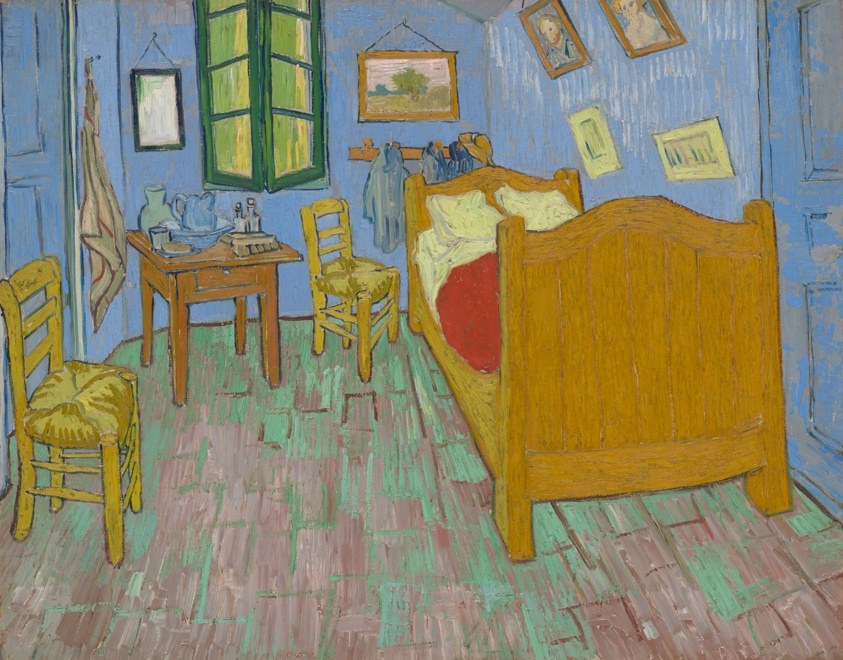
The Bedroom
Vincent van Gogh
Vincent van Gogh painted this version of his bedroom in September 1889, nearly a year after the original. The room belonged to his Yellow House in Arles. Its emphatic colors and tilting furniture can feel restless to modern eyes, although he intended the subject to convey a sense of rest.
Read the story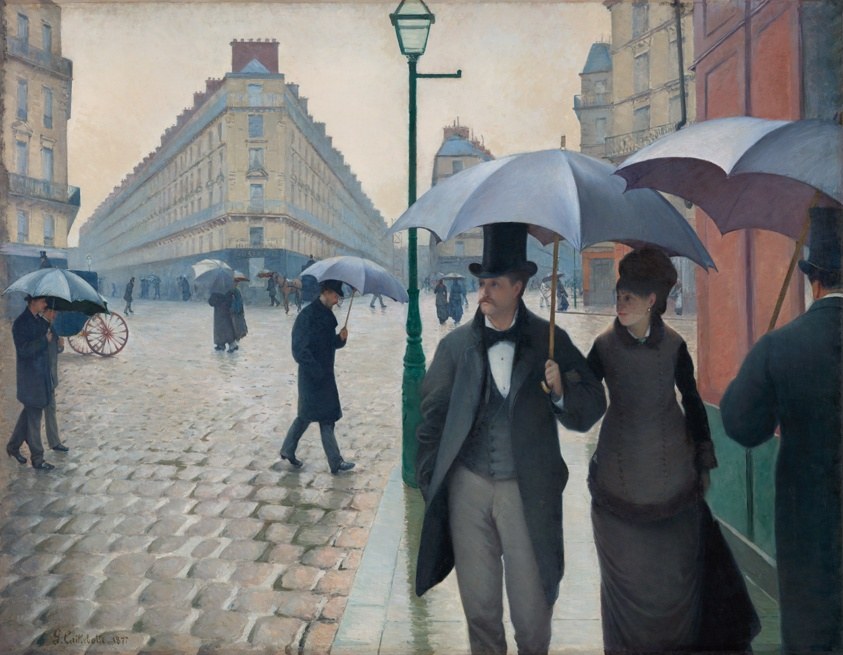
Paris Street; Rainy Day
Gustave Caillebotte
Gustave Caillebotte made wet Paris feel immediate without filling the air with painted raindrops. Umbrellas, glistening paving, and abruptly cropped pedestrians establish the weather and the crowd. The intersection was near his home, but the monumental canvas transforms a familiar neighborhood into an encounter with the scale of the modern city.
Read the story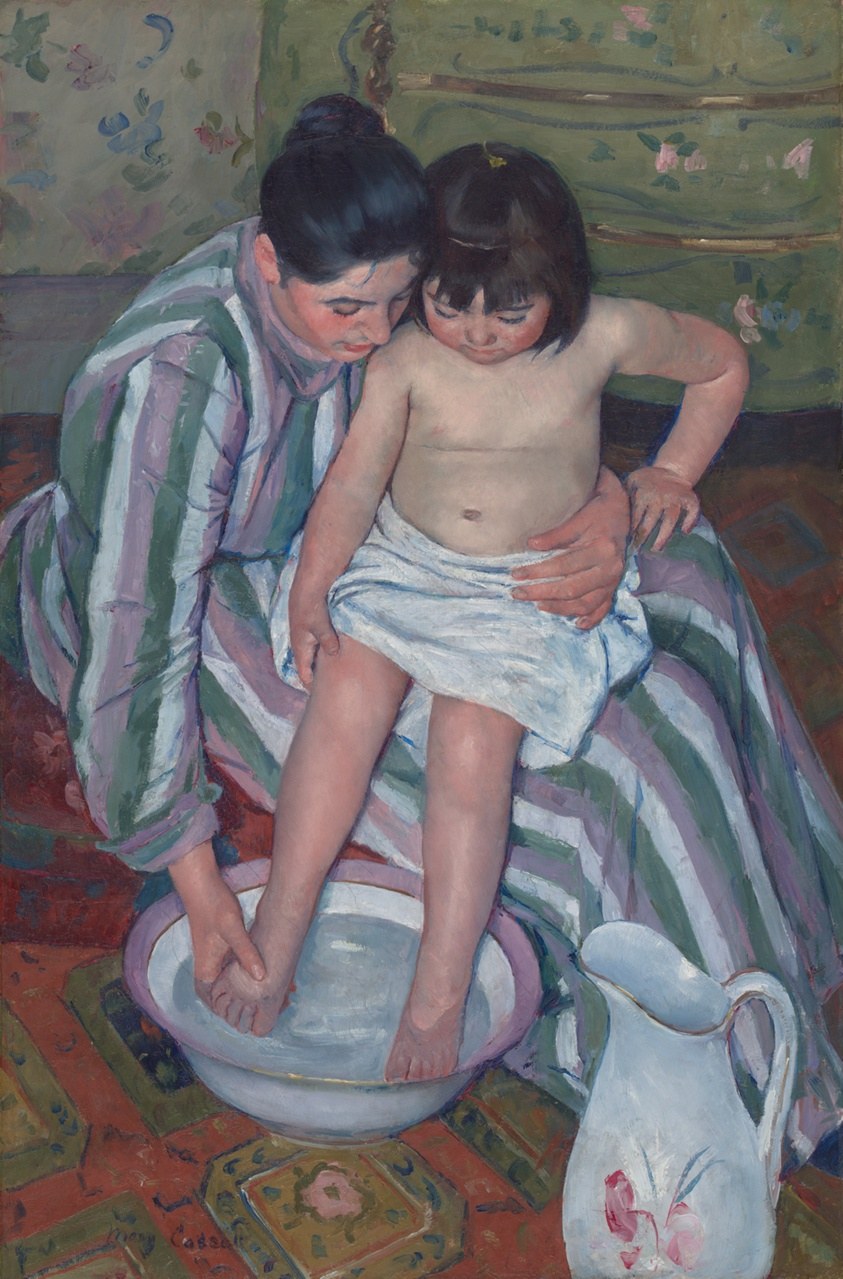
The Child's Bath
Mary Cassatt
Mary Cassatt gives a routine act of care the concentration of a major event. Looking steeply down into the scene, we follow two lowered faces toward a child's feet in a basin. Stripes, flowers, and carpet patterns surround the bodies, revealing Cassatt's engagement with Japanese art in the 1890s.
Read the story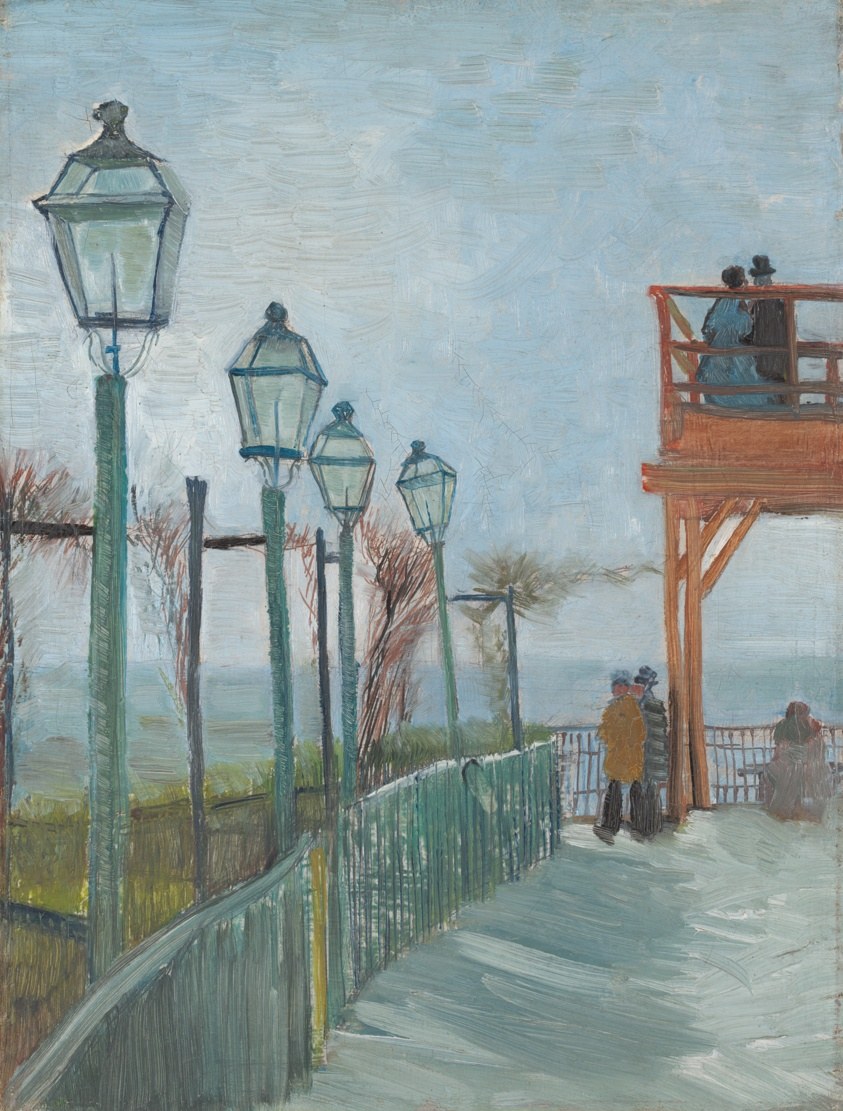
Terrace and Observation Deck at the Moulin de Blute-Fin, Montmartre
Vincent van Gogh
Before the bright rooms and orchards of southern France, Van Gogh painted the changing landscape around his Paris home. This Montmartre terrace belonged to a former windmill turned tourist attraction. Its tall lamps and observation platform show a rural landmark being adapted to the leisure of the expanding city.
Read the story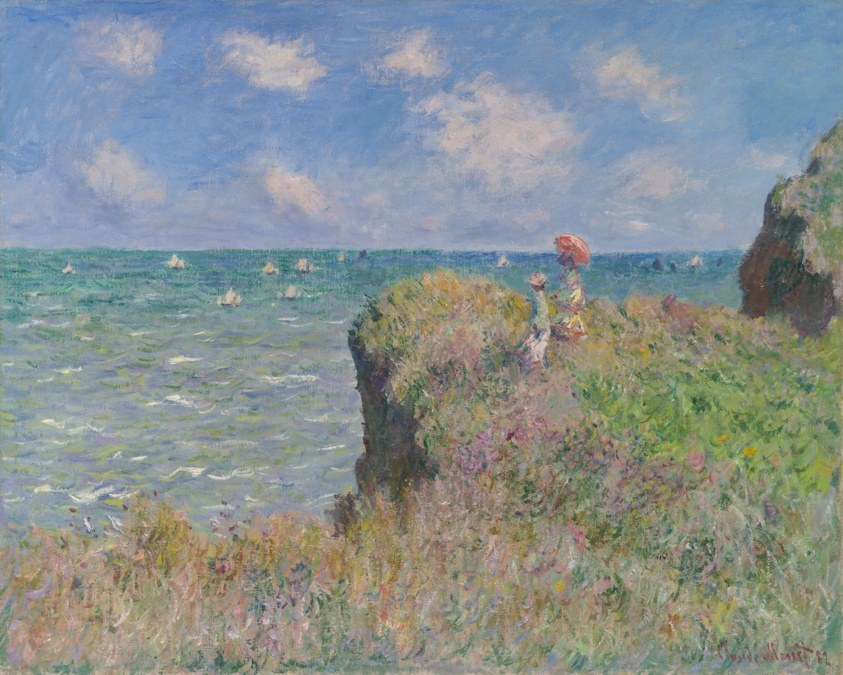
Cliff Walk at Pourville
Claude Monet
Monet found a productive retreat at Pourville on the Normandy coast in 1882. Two women, probably Marthe and Blanche Hoschedé, stand amid grass that seems to share the movement of their clothing and the sea. Beneath the lively surface, technical examination reveals that he revised the shape of the right-hand cliff.
Read the story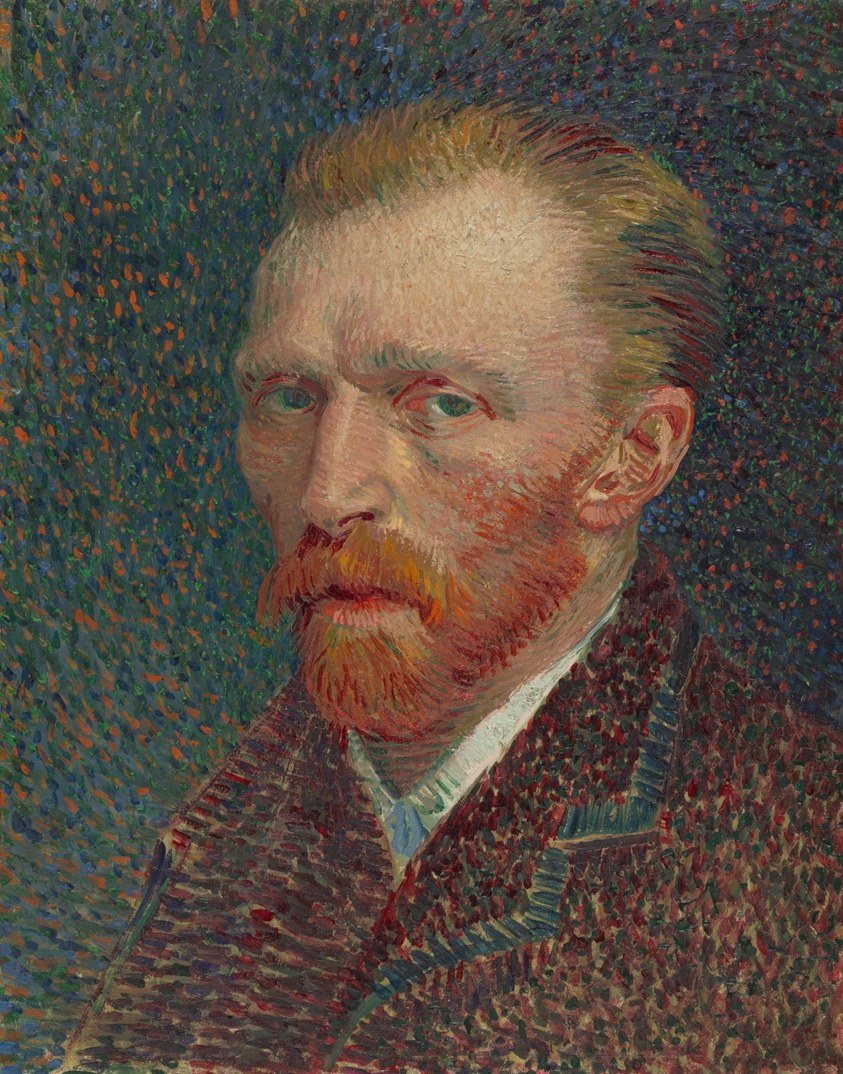
Self-Portrait
Vincent van Gogh
Van Gogh painted this small self-portrait during his Paris years, when new approaches to color were reshaping his work. Built on artist's board rather than canvas, the face and surrounding space are alive with distinct dabs. The influence of Seurat's pointillism becomes a highly personal method of describing a human presence.
Read the story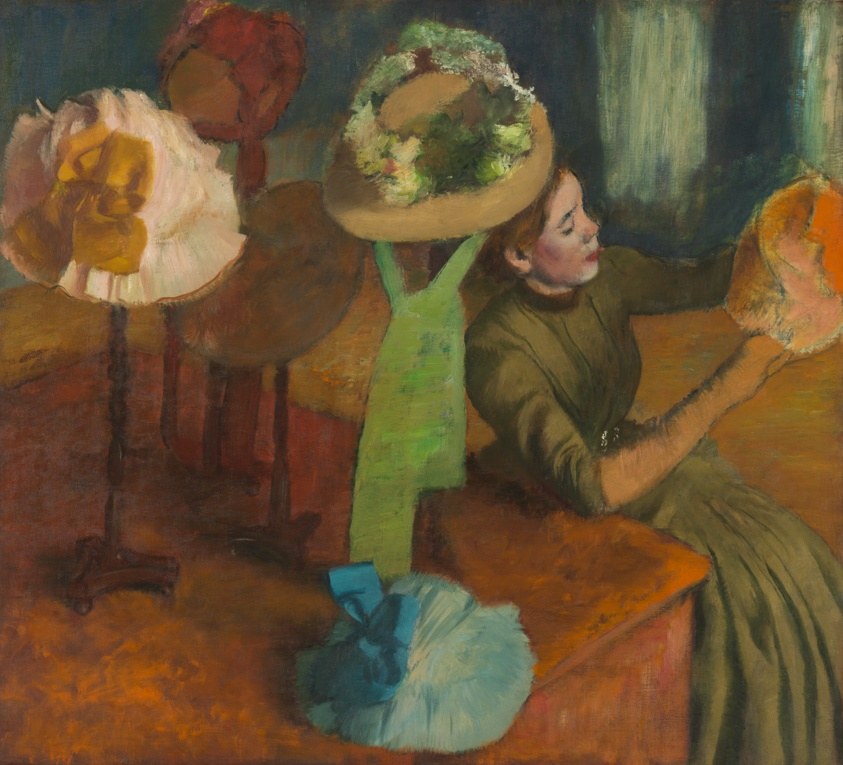
The Millinery Shop
Hilaire Germain Edgar Degas
A woman examines a hat in a shop, but Degas leaves her social position uncertain. Her elegant clothes could belong to a customer or a skilled employee. Around her, hats become large arrangements of color, and one appears almost to sit on her head despite being displayed on a stand.
Read the story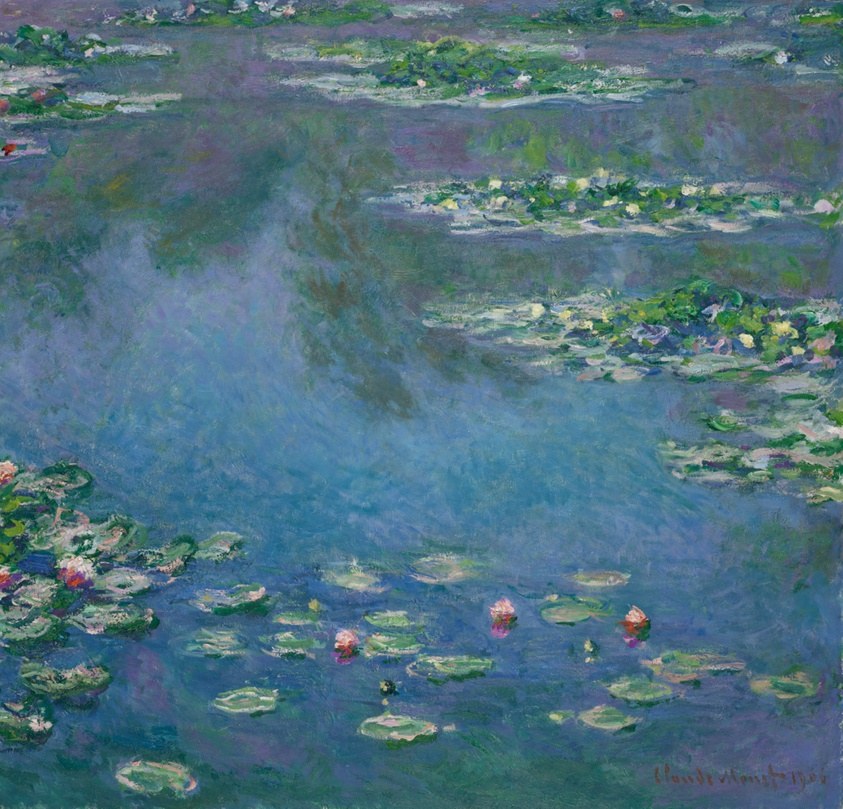
Water Lilies
Claude Monet
Monet's 1906 Water Lilies removes the familiar horizon and concentrates on the surface of his garden pond. Plants, reflected trees, and glimpses of sky share the same space. The peaceful effect was carefully worked: examination of the canvas has revealed substantial changes beneath its seemingly effortless arrangement of floating color.
Read the story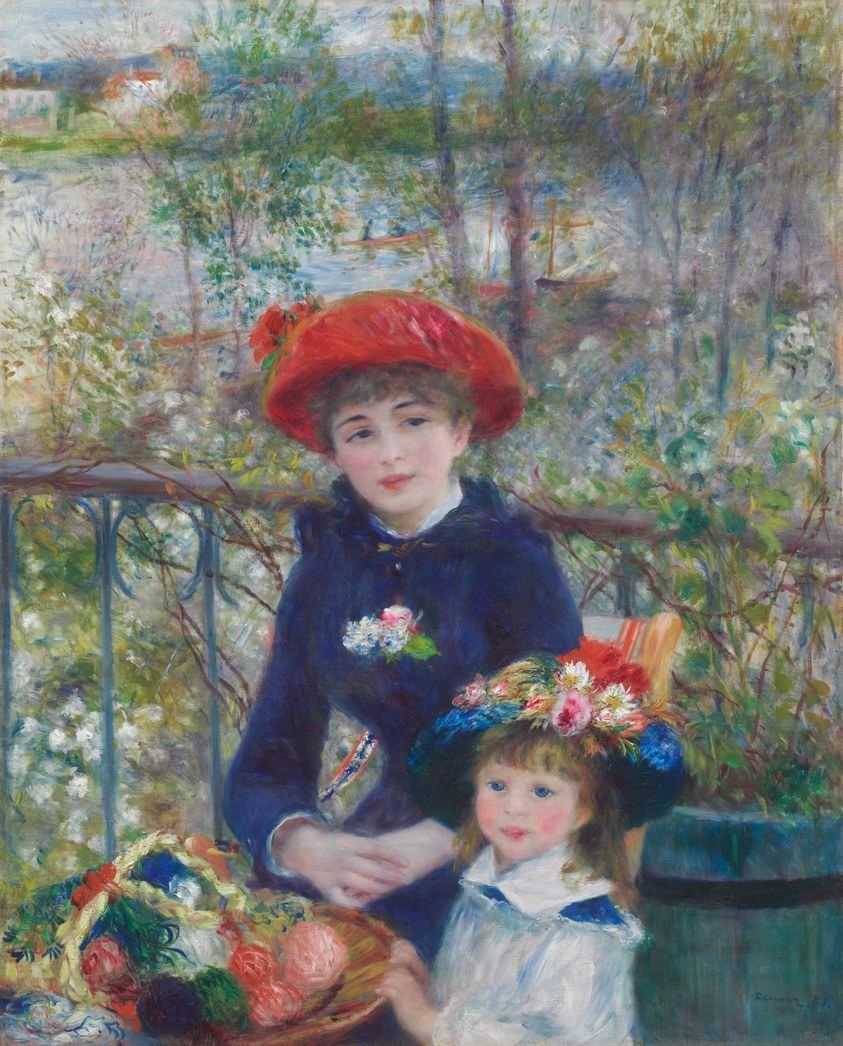
Two Sisters (On the Terrace)
Pierre-Auguste Renoir
Renoir's two sitters were paid models, not sisters, despite the painting's familiar title. He posed them at the Restaurant Fournaise in Chatou, a riverside escape from Paris. Their carefully painted faces contrast with the loose trees and water behind them, while hats, flowers, and yarn distribute bright color across the terrace.
Read the story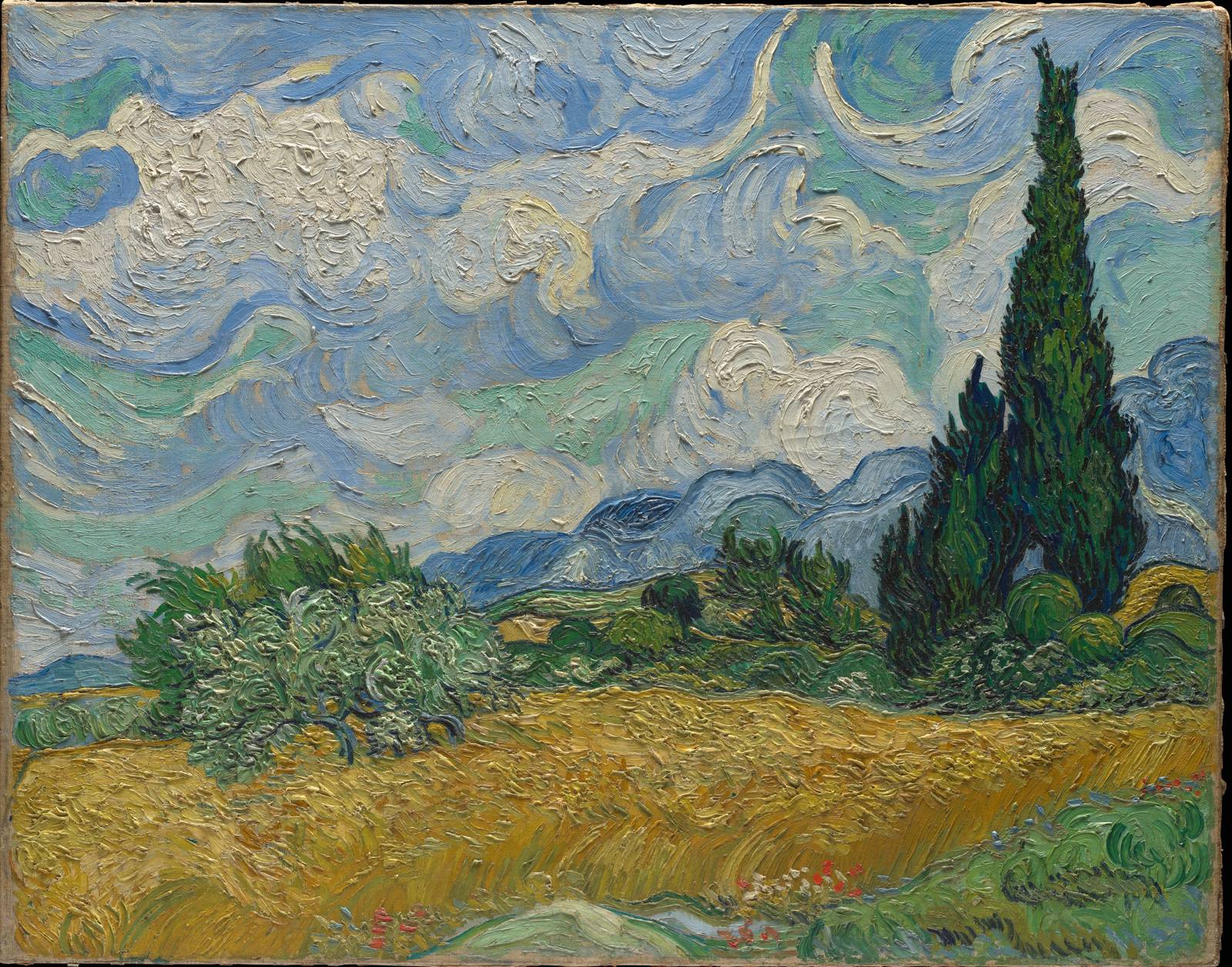
Wheat Field with Cypresses
Vincent van Gogh
Vincent van Gogh painted this landscape outdoors at Saint-Rémy in 1889, bringing the same restless brushwork to wheat, trees, and clouds. He valued the result enough to make two further versions in his studio. The dark cypresses hold the composition together while almost everything around them seems to move.
Read the story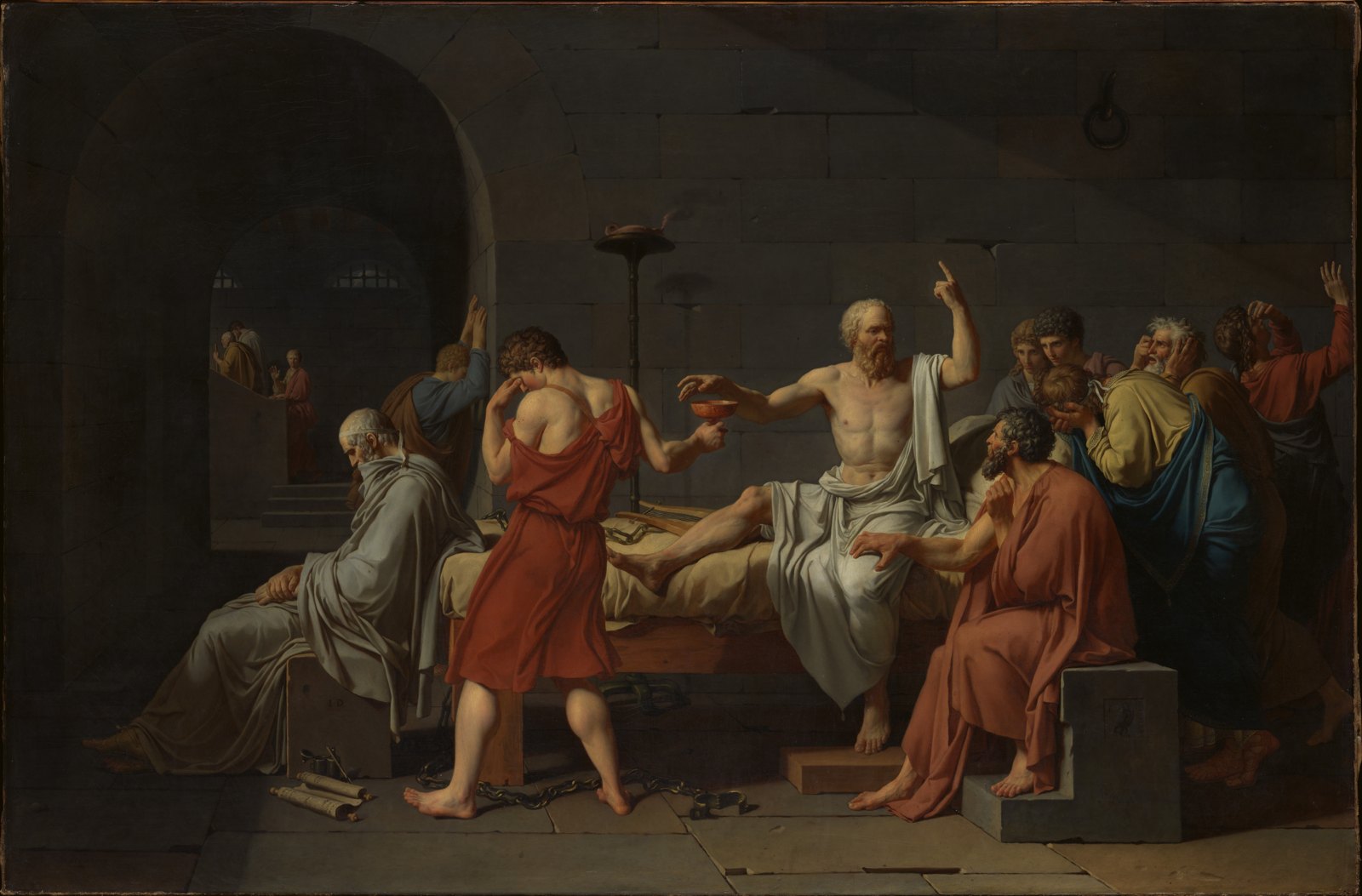
The Death of Socrates
Jacques Louis David
Jacques Louis David turns the death of Socrates into a drama of conviction: the philosopher reaches for hemlock while continuing to teach. Painted in 1787, the scene draws on an ancient account but deliberately includes Plato, who was not present. Controlled gestures and hard stone surroundings make emotional differences sharply visible.
Read the story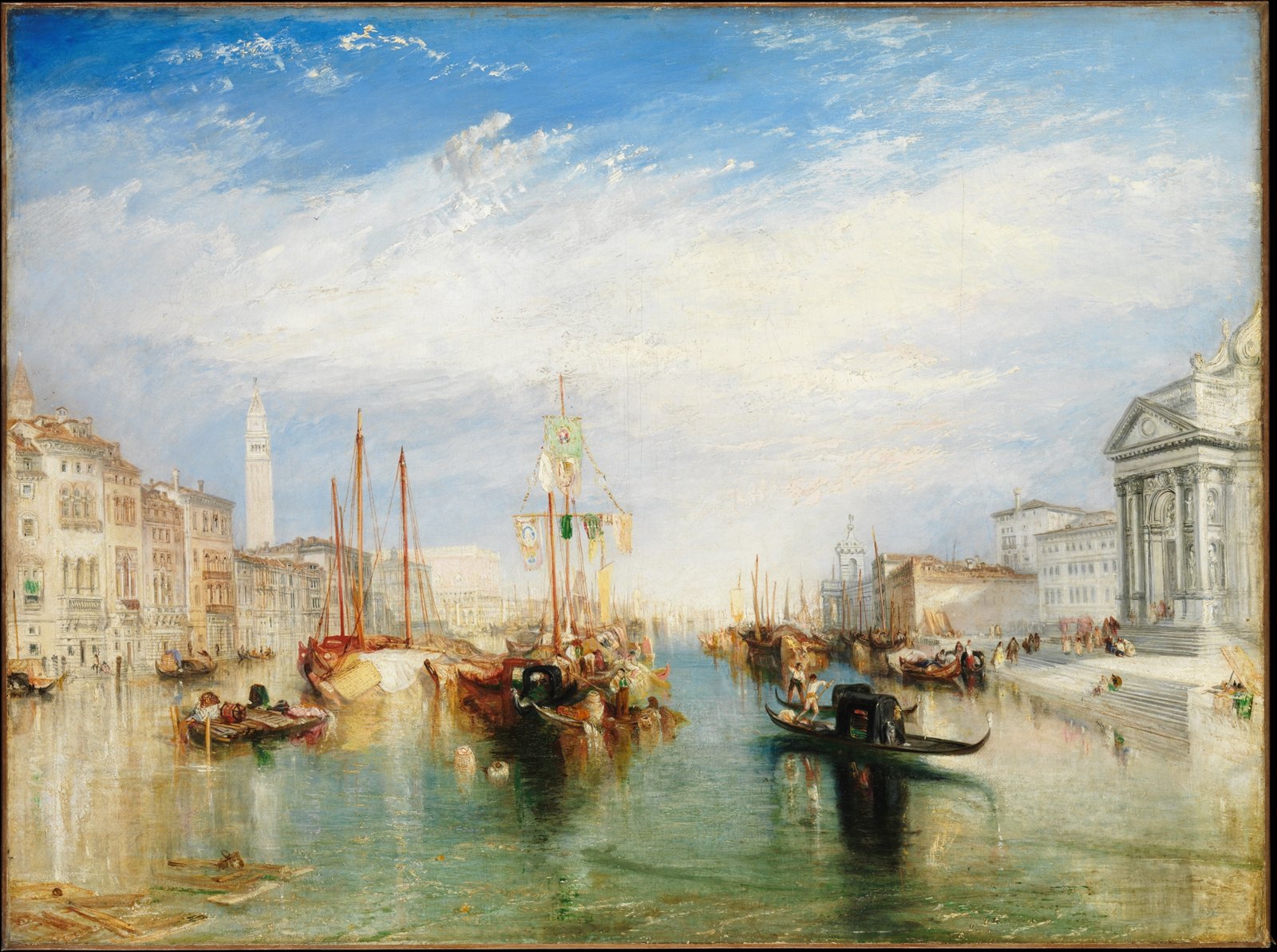
Venice, from the Porch of Madonna della Salute
Joseph Mallord William Turner
Turner’s Venice seems to hover between masonry and reflection. Painted around 1835 after two visits to the city, this view combines experience of marine painting with the luminous effects he developed in watercolor. The canvas was acclaimed at the Royal Academy, where its light transformed a recognizable city into an atmospheric spectacle.
Read the story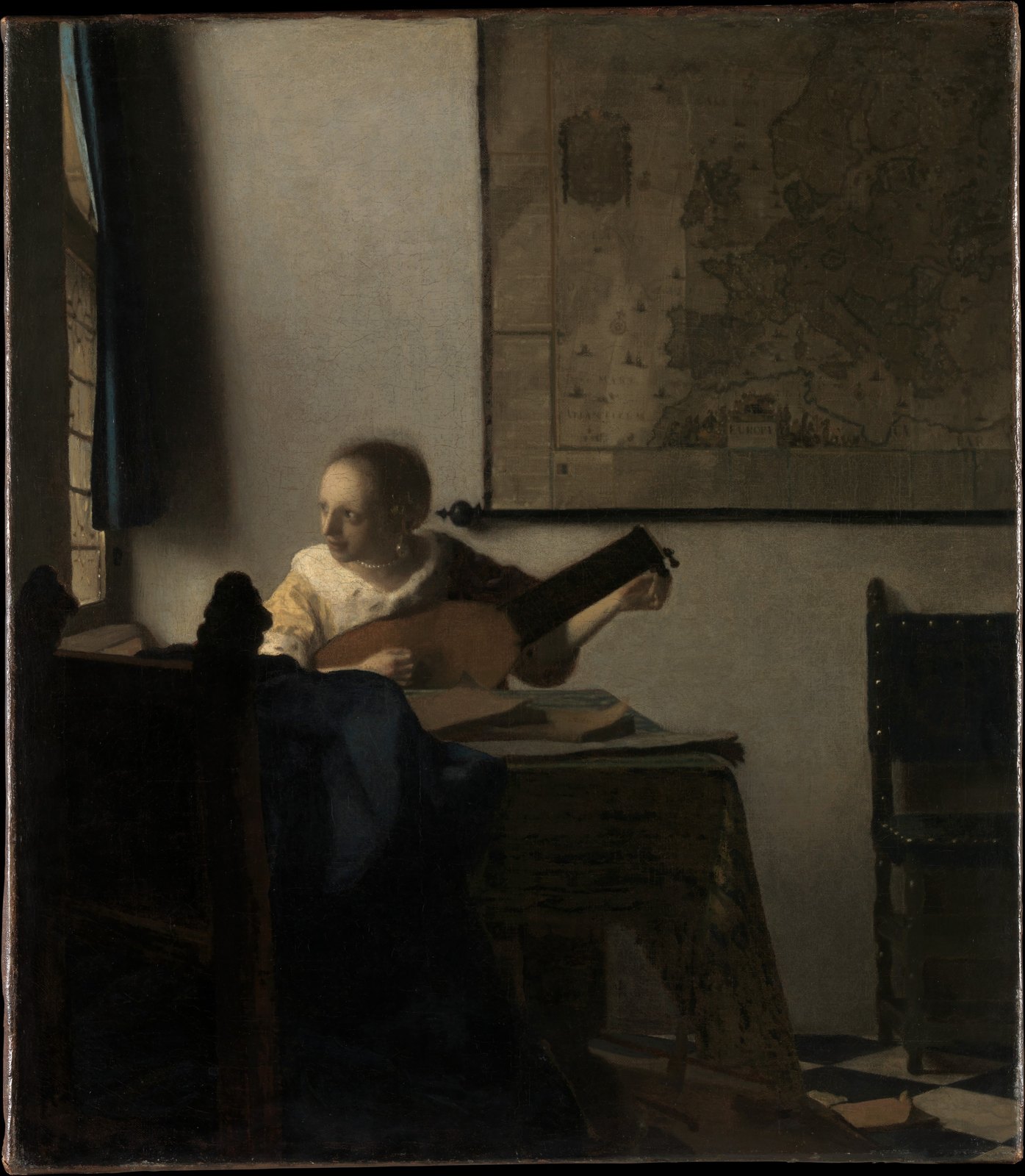
Young Woman with a Lute
Johannes Vermeer
A woman tunes her lute and looks toward the window, while music books and another instrument suggest company to come. Vermeer turns preparations for a duet into a quiet interval of expectation. Painted around 1662–63, the room also connects private leisure with a wider world through its large map of Europe.
Read the story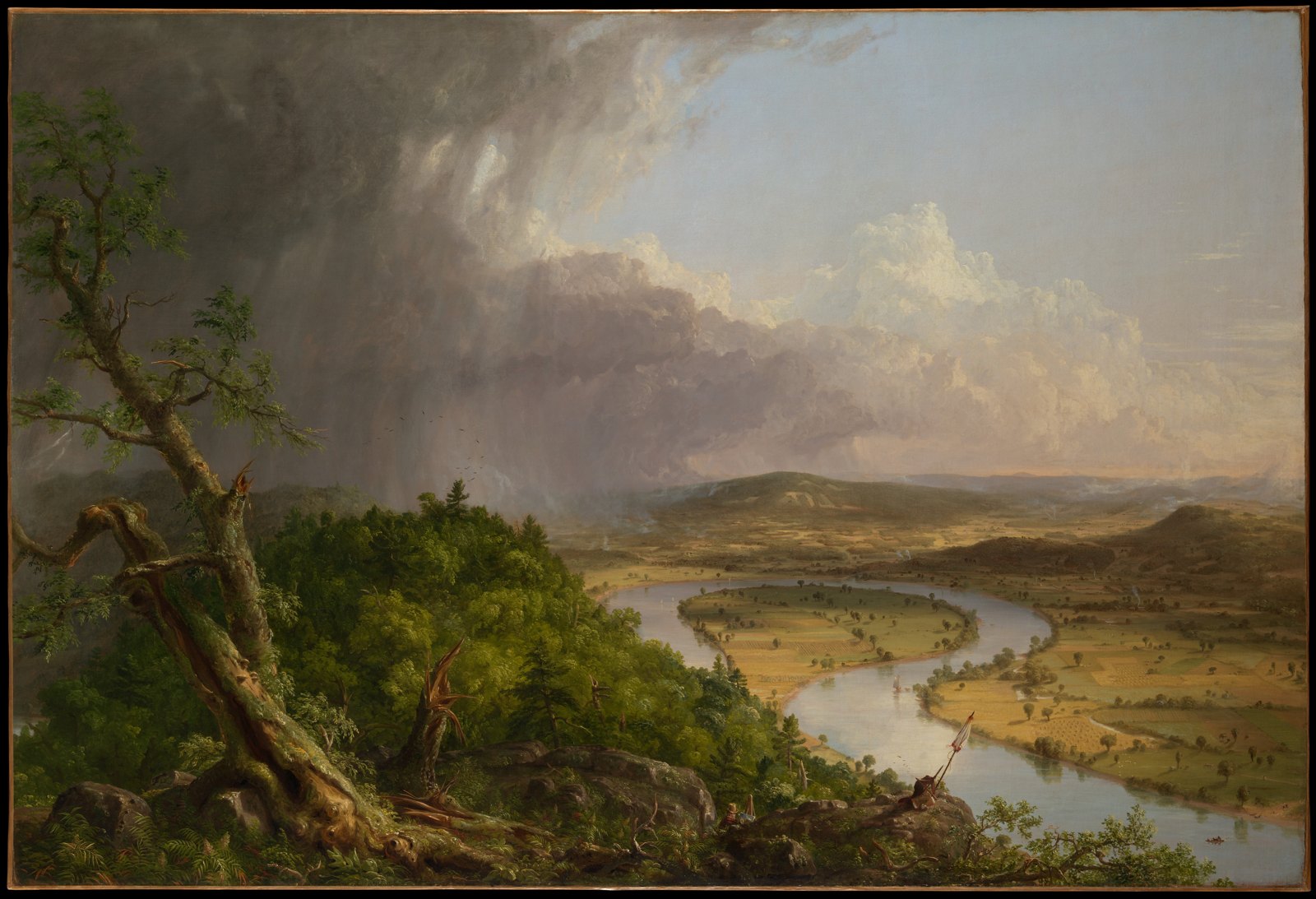
View from Mount Holyoke, Northampton, Massachusetts, after a Thunderstorm—The Oxbow
Thomas Cole
Thomas Cole’s view from Mount Holyoke places storm-darkened woodland beside the sunlit farms of the Connecticut River valley. Painted in 1836, it makes settlement and land use part of the landscape’s meaning. A tiny self-portrait near the foreground reminds us that this sweeping view is also a deliberately constructed picture.
Read the story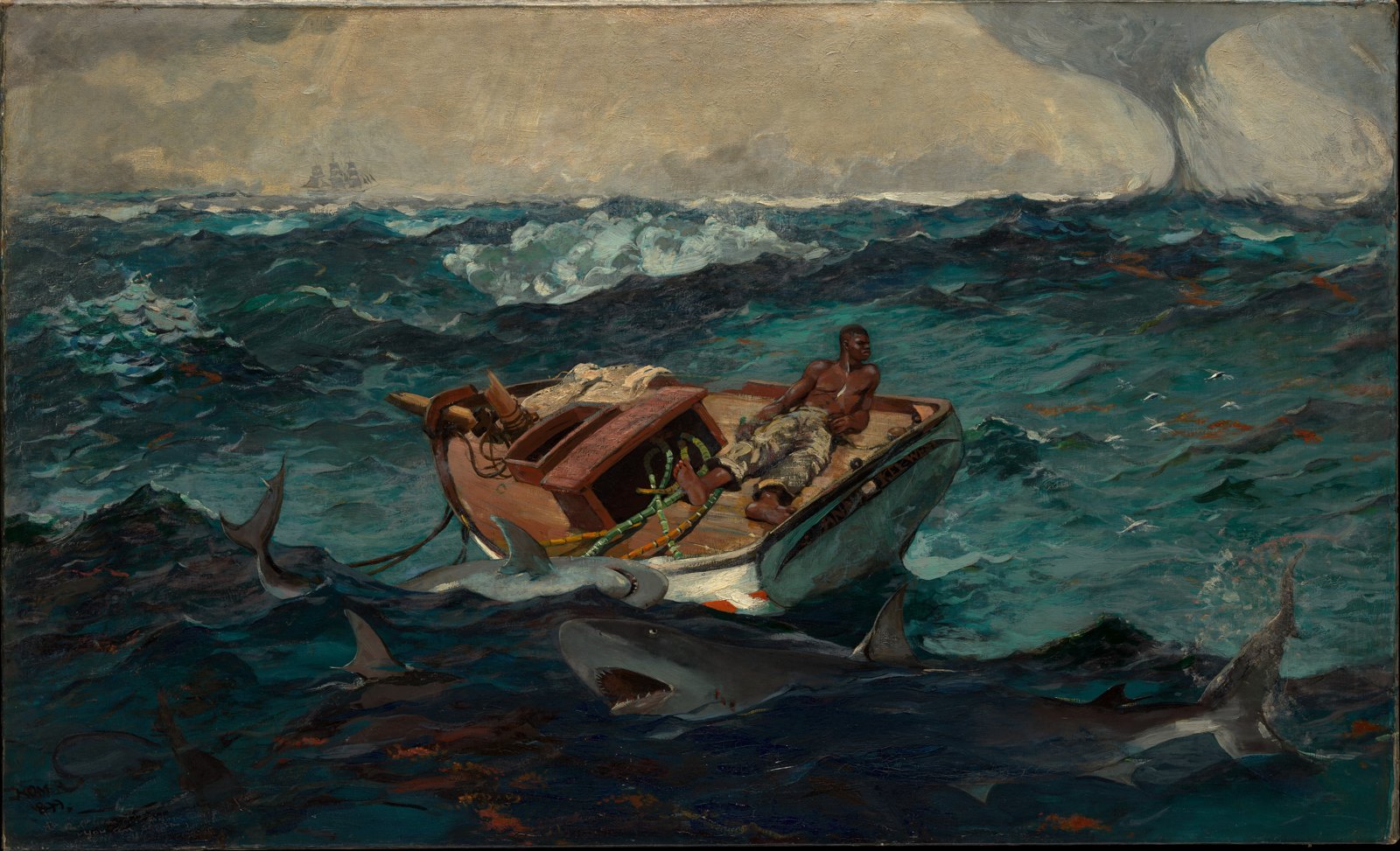
The Gulf Stream
Winslow Homer
A damaged boat, circling sharks, and a distant waterspout surround a solitary Black man in Winslow Homer’s The Gulf Stream. Begun in 1899 and reworked by 1906, the painting connects danger at sea with Caribbean history through its sugarcane cargo. A distant ship offers possibility without resolving the survivor’s fate.
Read the story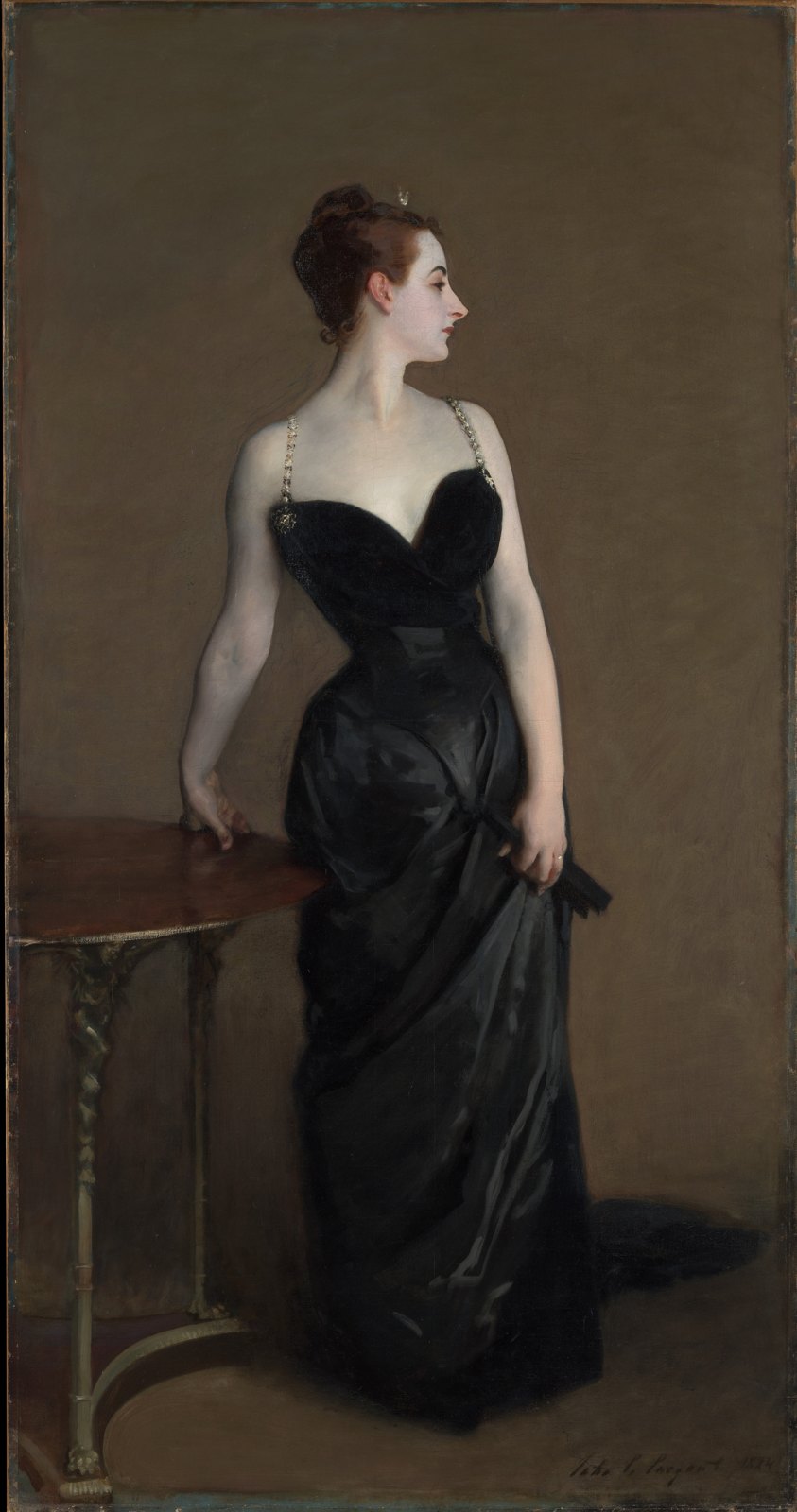
Madame X (Virginie Amélie Avegno Gautreau)
John Singer Sargent
Sargent painted Virginie Gautreau without a commission, hoping her striking appearance would advance his reputation. The portrait instead drew ridicule at the Paris Salon of 1884. He later raised a fallen shoulder strap and kept the canvas for decades; its disciplined silhouette still makes the sitter’s carefully fashioned appearance feel formidable.
Read the story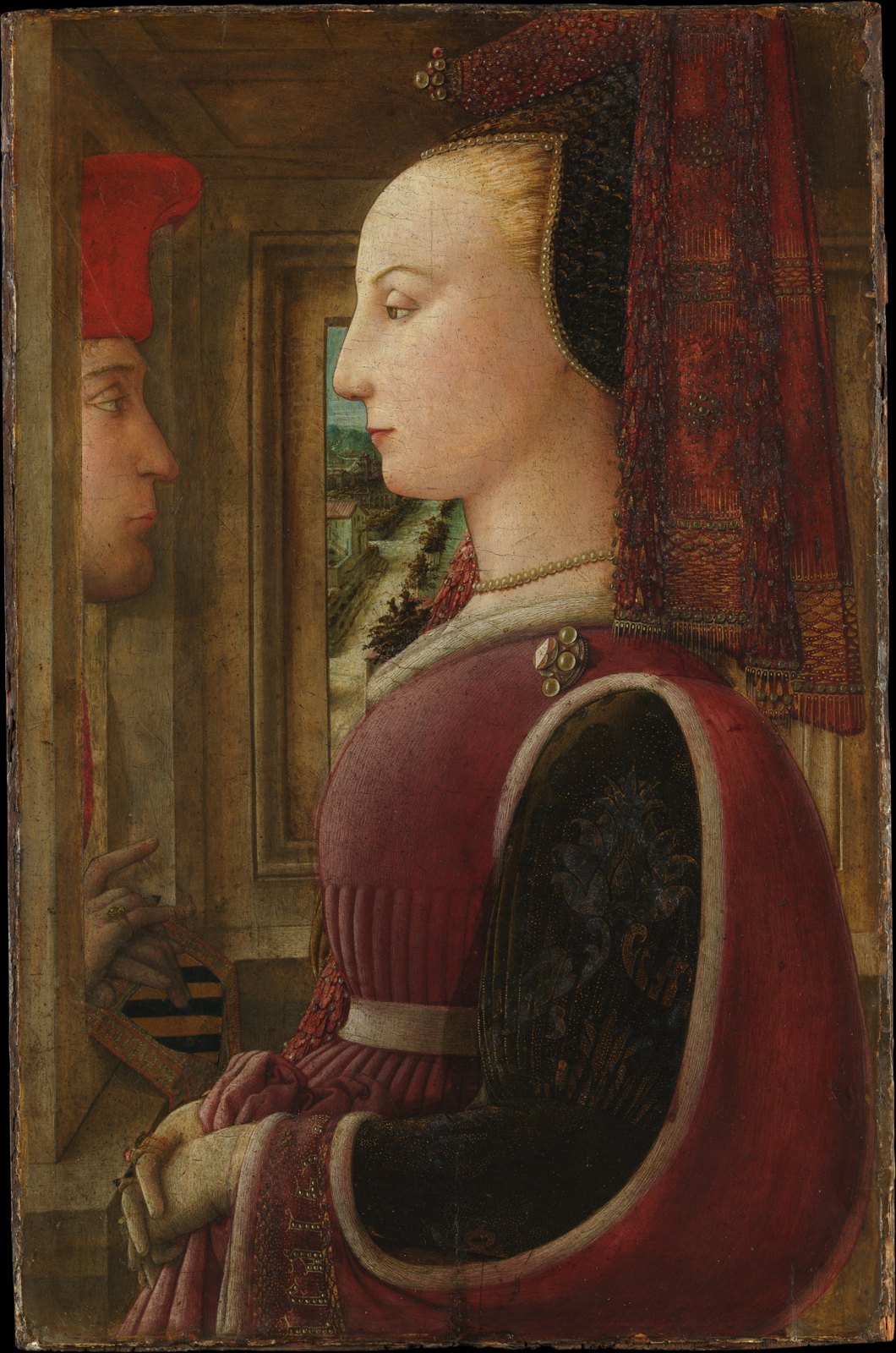
Portrait of a Woman with a Man at a Casement
Fra Filippo Lippi
Lippi’s double portrait places a richly dressed woman inside a room and a man at its window. Painted around 1440, it helped establish new possibilities for Italian portraiture: two sitters, domestic space, and a distant landscape. A family coat of arms and an embroidered promise suggest a marriage, though the identities remain uncertain.
Read the story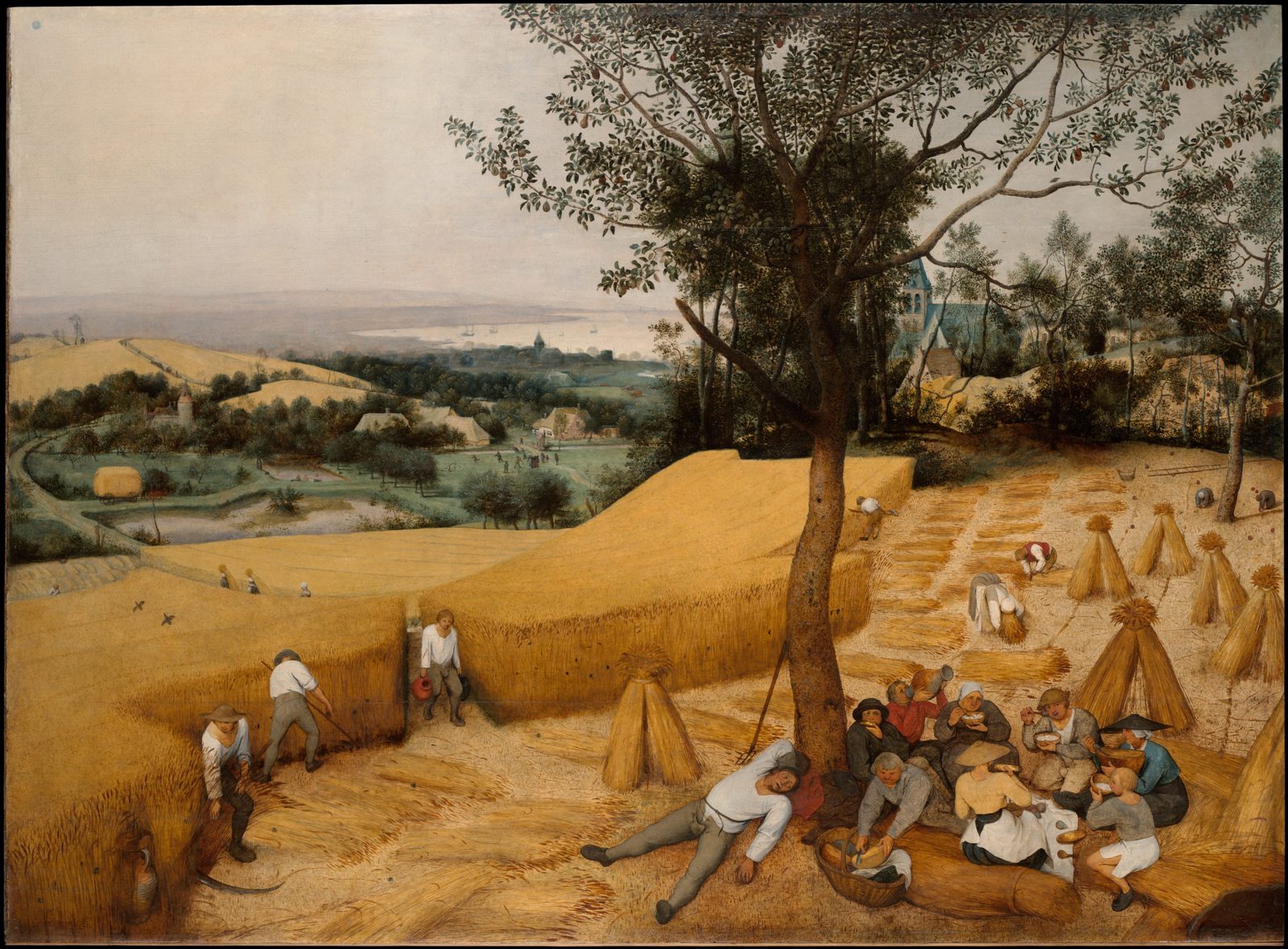
The Harvesters
Pieter Bruegel the Elder
Bruegel’s harvest scene belonged to a cycle of the seasons made for a merchant’s dining room. Workers cut wheat, eat, and sleep in a landscape of summer abundance. Painted in 1565, it gives rural labor an absorbing human presence while presenting a notably harmonious view for the pleasure of a wealthy urban patron.
Read the story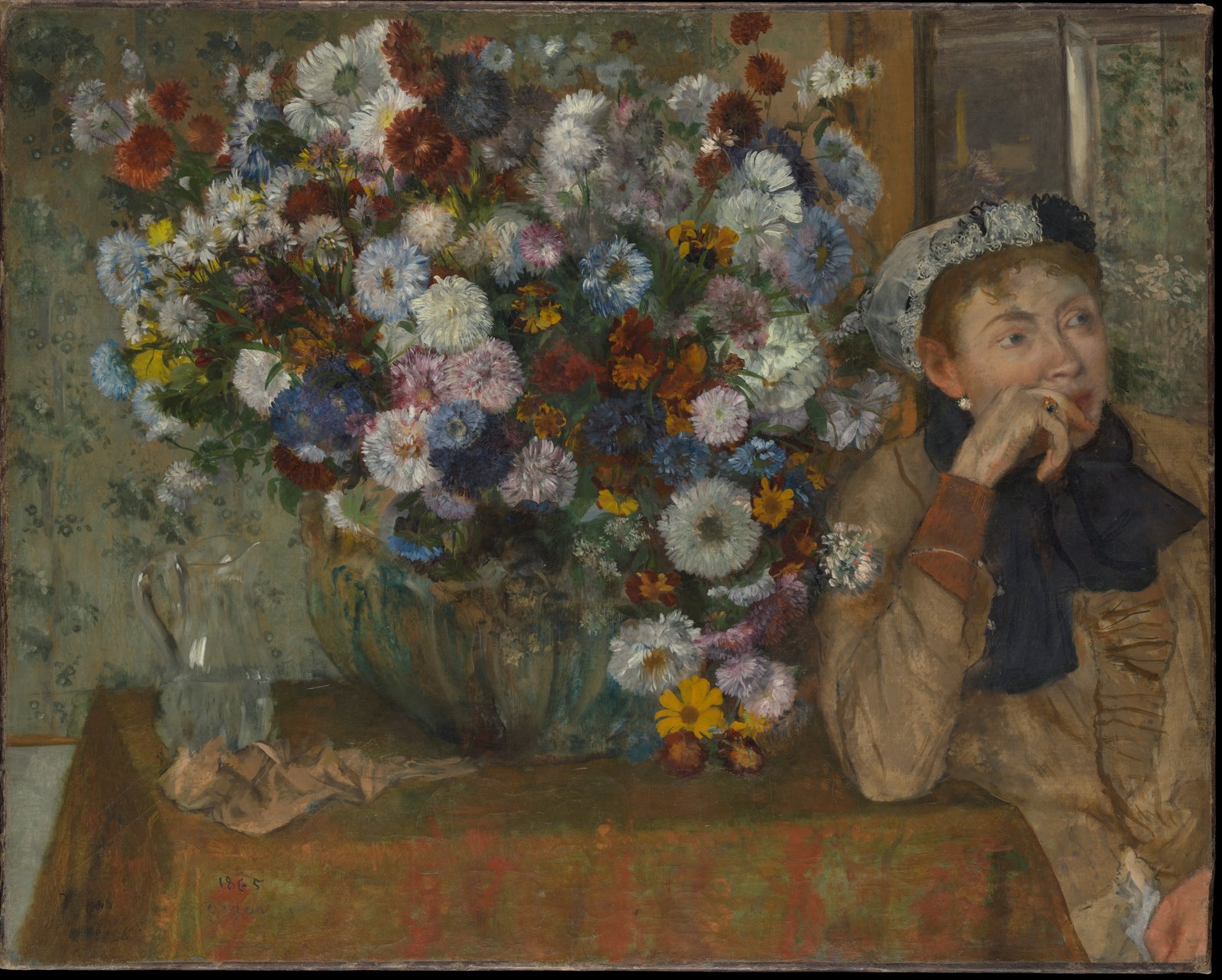
A Woman Seated beside a Vase of Flowers (Madame Paul Valpinçon?)
Edgar Degas
Degas gives the flowers the center of the canvas and pushes his sitter to the edge, making a carefully arranged picture feel casually encountered. The woman is probably Madame Paul Valpinçon, whose family he visited in the country. The late-summer bouquet turns a portrait into an unusual partnership between a person and a still life.
Read the story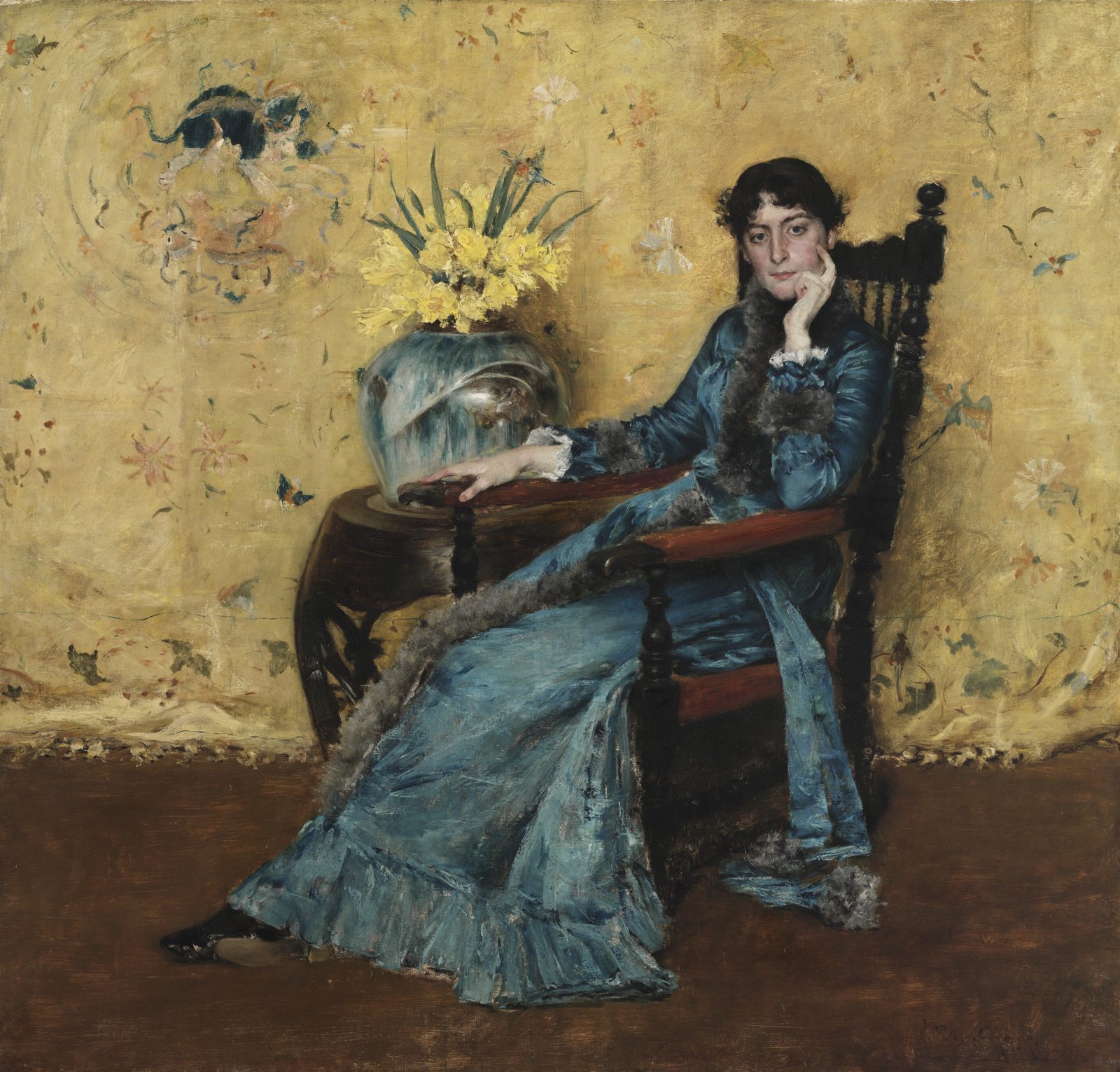
Portrait of Dora Wheeler
William Merritt Chase
Dora Wheeler was a designer as well as William Merritt Chase's student. The rich textile behind her points to the professional world she helped build with her mother in a decorating business run by women. Chase's portrait won a gold medal in Munich in 1883, giving their artistic partnership an international stage.
Read the story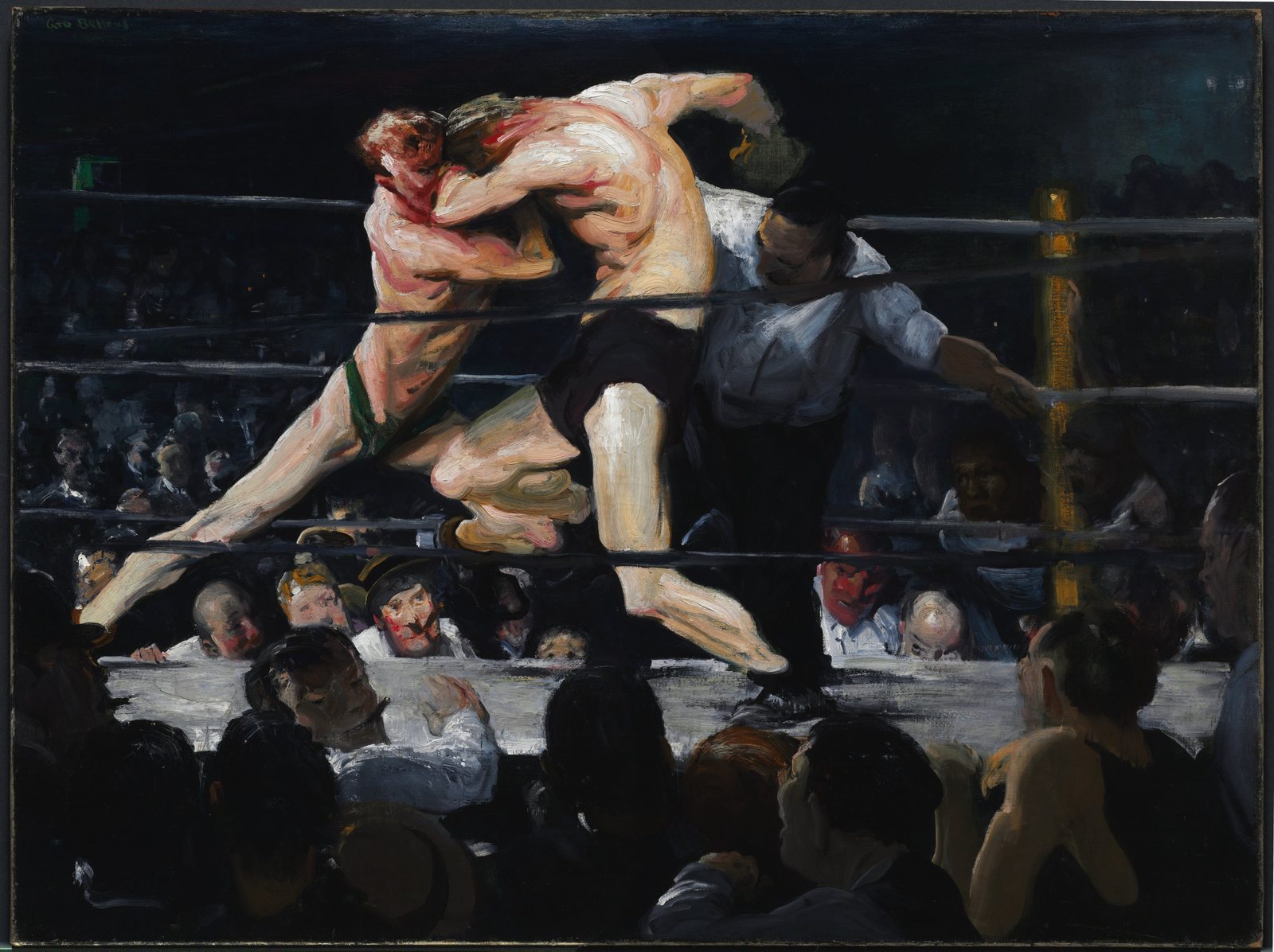
Stag at Sharkey's
George Bellows
George Bellows painted a boxing club where a legal loophole turned outsiders into temporary members, or “stags.” The crowded room and colliding bodies show why the sport fascinated and unsettled early twentieth-century audiences. The painting makes the spectators part of the action: faces press toward the ring while pale limbs flash against the darkness.
Read the story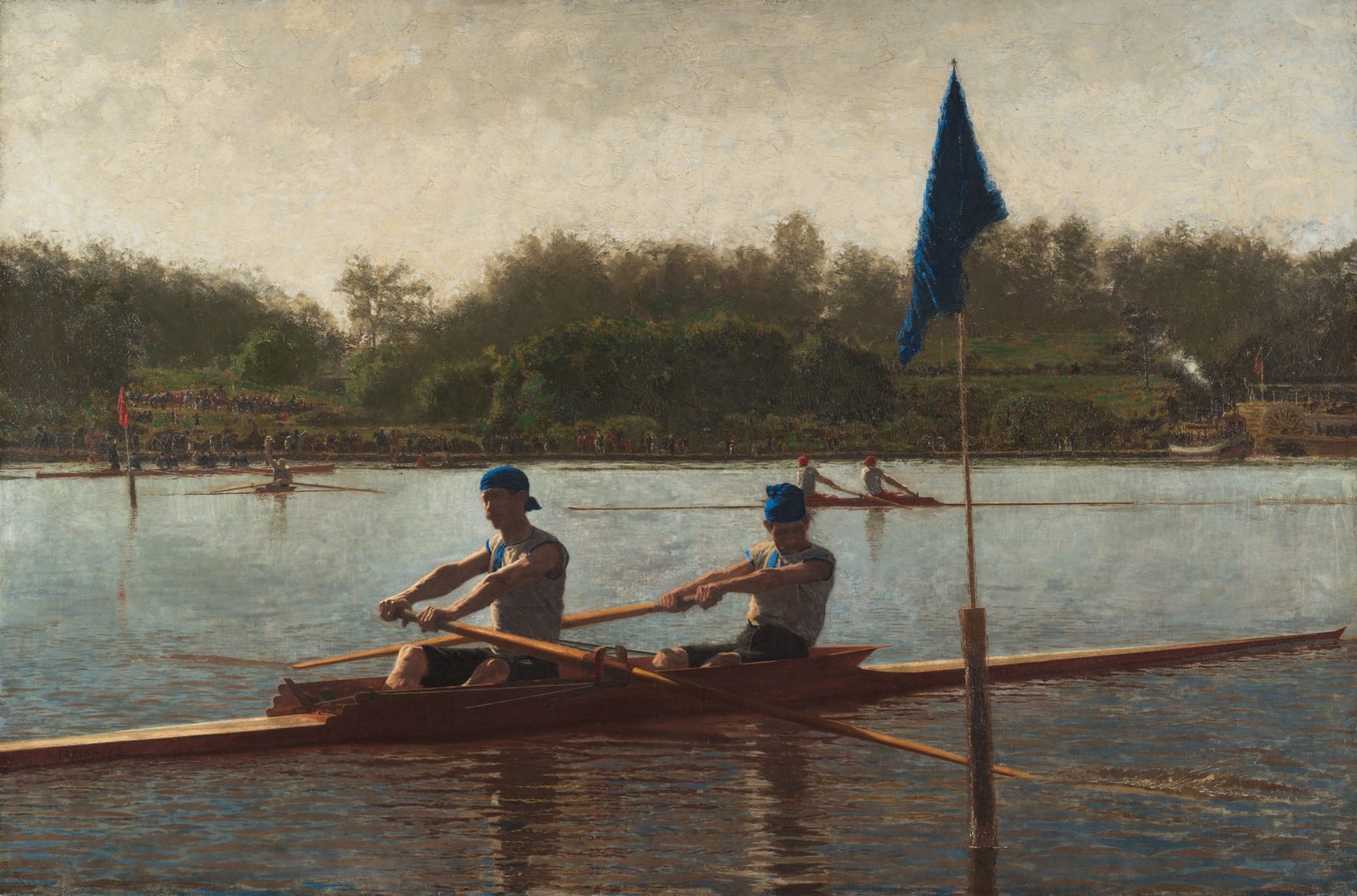
The Biglin Brothers Turning the Stake
Thomas Eakins
Thomas Eakins chose a demanding turn rather than a finish-line celebration to portray the champion rowers Barney and John Biglin. The scene recalls their May 1872 race on Philadelphia's Schuylkill River. Precise spacing, coordinated bodies, and the distant rival boat turn an apparently quiet river view into a study of athletic judgment.
Read the story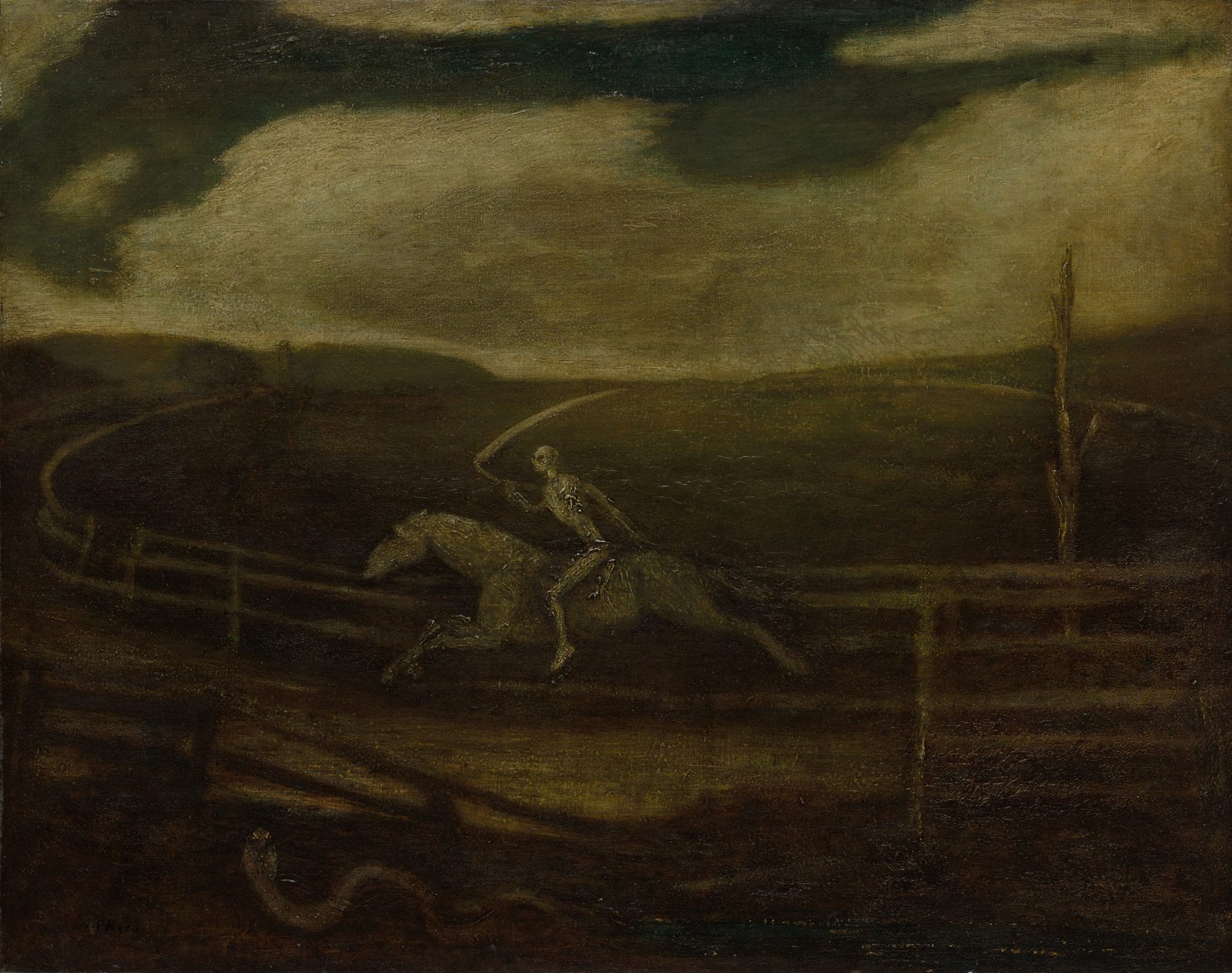
The Race Track (Death on a Pale Horse)
Albert Pinkham Ryder
Albert Pinkham Ryder transformed a horse race into a dark image of mortality after a friend's death. A skeleton rides alone around the track, carrying a scythe, while a snake occupies the foreground. The empty circuit replaces the excitement of competition with repetition, isolation, and the knowledge that no ordinary victory is possible.
Read the story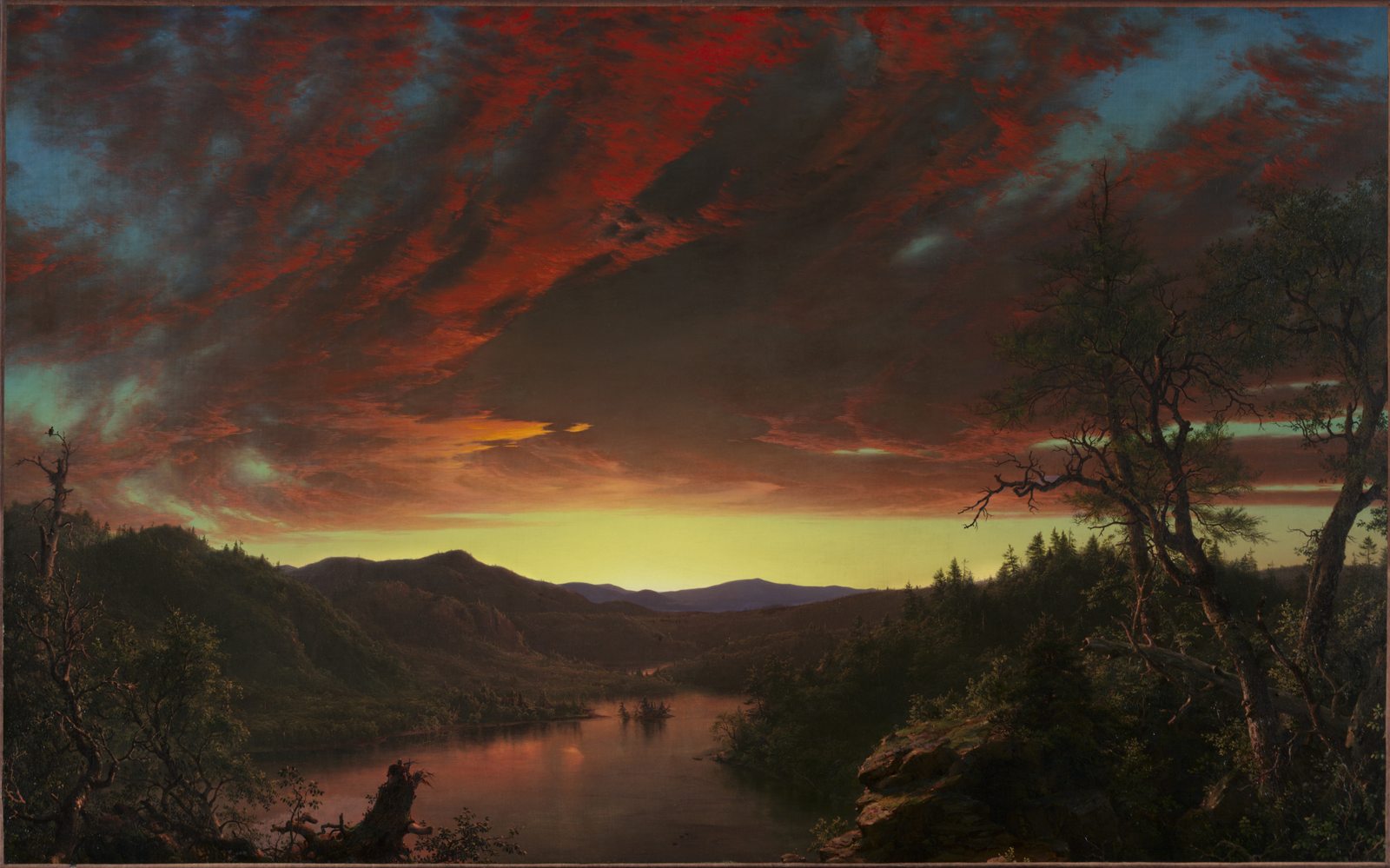
Twilight in the Wilderness
Frederic Edwin Church
Frederic Edwin Church built this blazing Maine sunset from sketches made nearly two years earlier. Painted in his New York studio in 1860, the landscape became a public event when he exhibited it alone. Its fiery sky can also suggest the country's approaching Civil War, although that reading remains an interpretation rather than a recorded explanation.
Read the story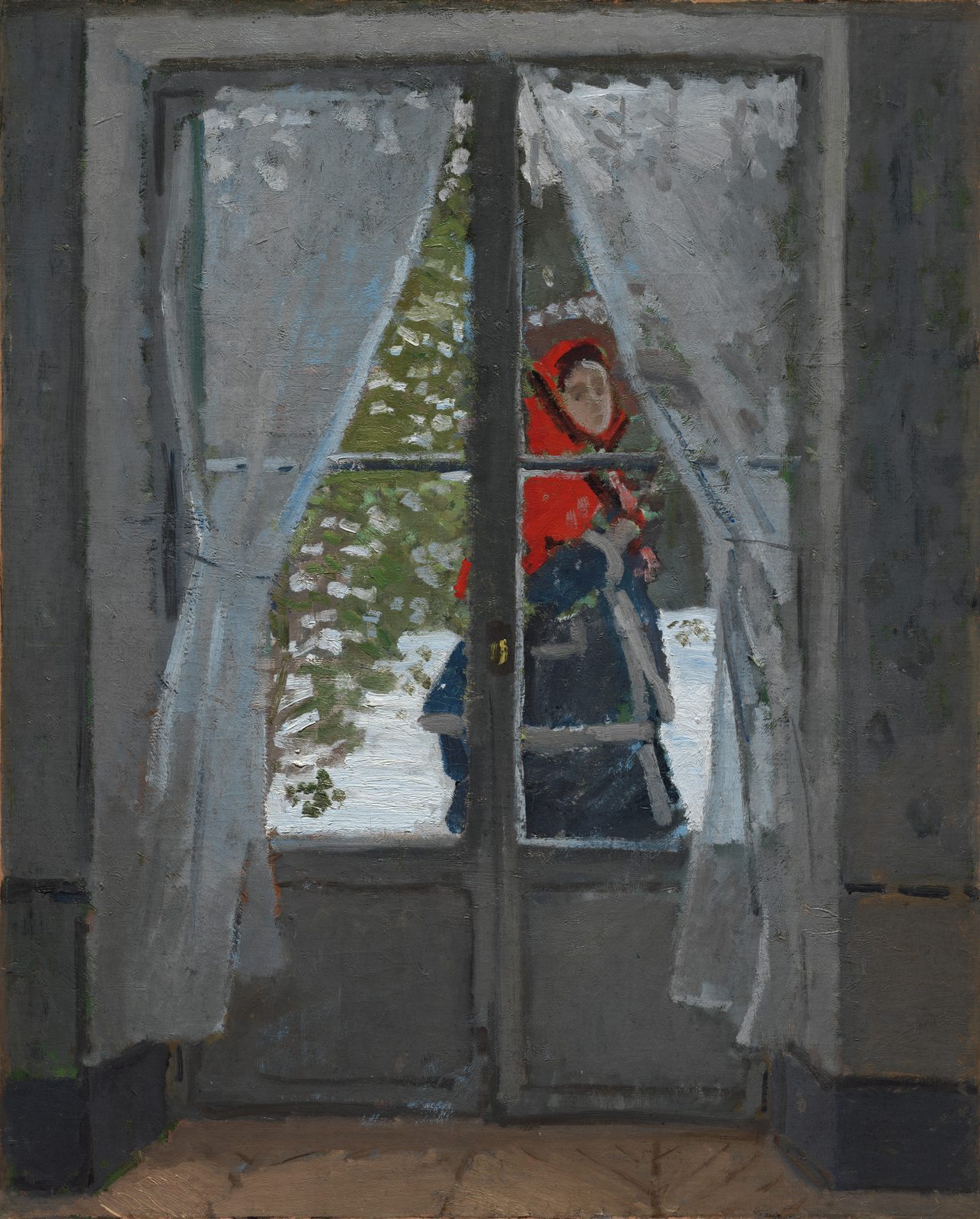
The Red Kerchief
Claude Monet
Camille Monet appears outside a pair of glass doors, her red clothing vivid against the snow. Monet makes the architecture and curtains part of the encounter, separating the warm interior viewpoint from the winter scene. The quick marks that form her face preserve a fleeting glance in a painting he kept throughout his life.
Read the story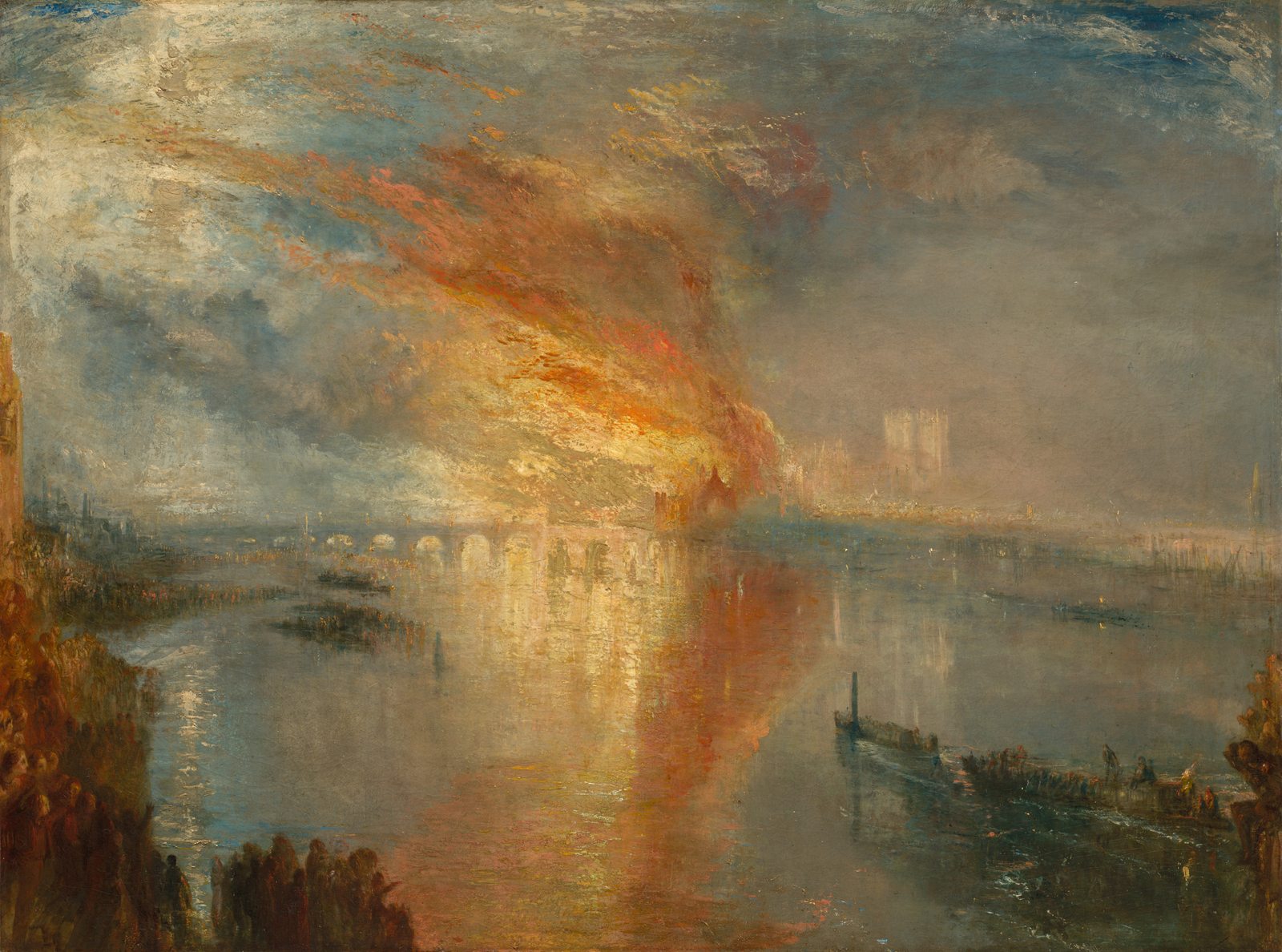
The Burning of the Houses of Lords and Commons, 16 October 1834
J. M. W. Turner
The Houses of Parliament burned on 16 October 1834 as crowds watched from the Thames. Turner transformed the disaster into a vast encounter between fire, water, and human effort. His enlarged flames dominate the scene, while boats heading toward the blaze preserve a reminder of the difficult practical work taking place beneath the spectacle.
Read the story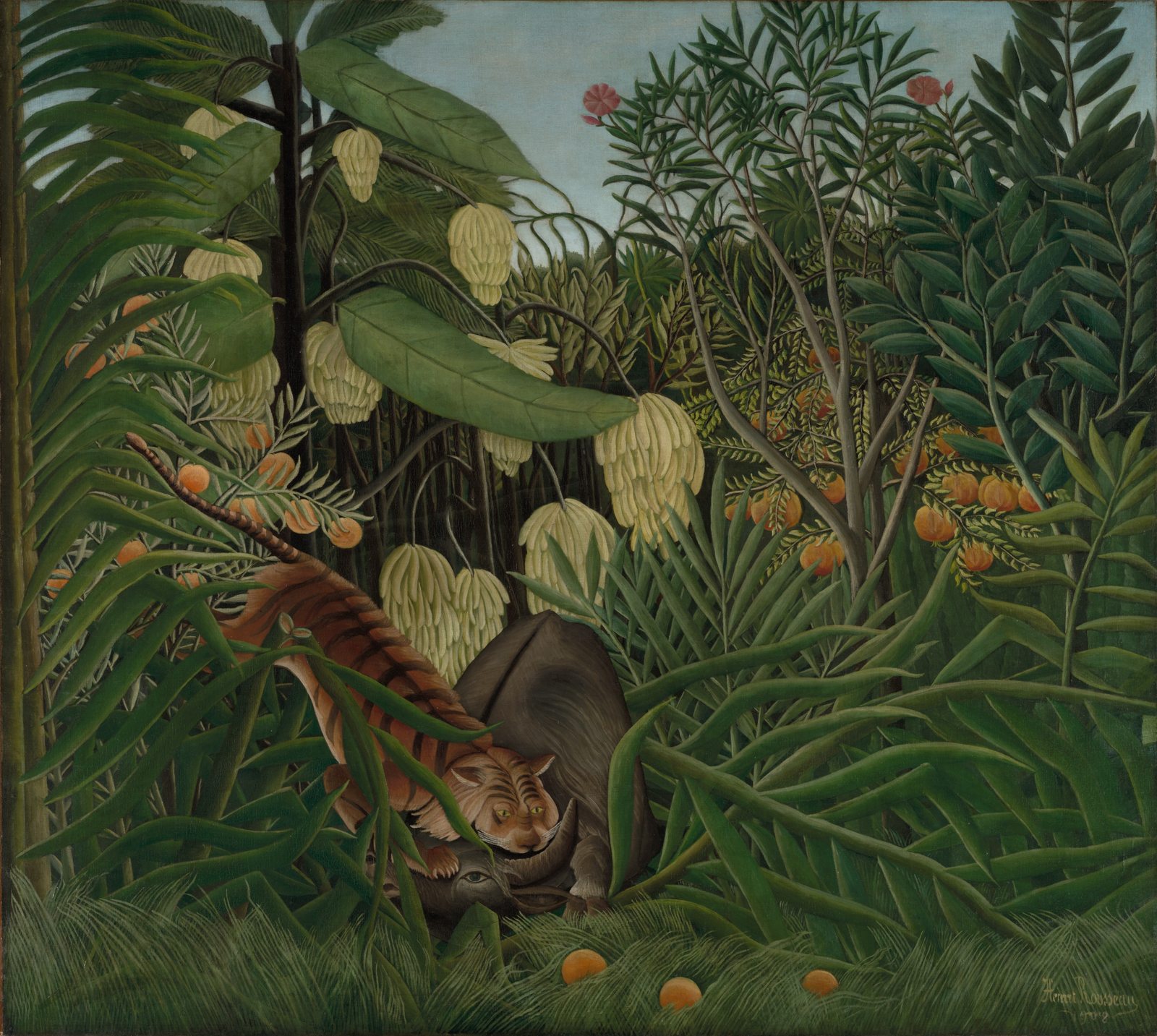
Fight Between a Tiger and a Buffalo
Henri Rousseau
Henri Rousseau never traveled beyond France, yet he built jungle paintings from botanical gardens, books, and invention. Here, enormous leaves almost swallow a violent struggle between two animals. The sharply drawn plants and improbable bananas reveal an imagined environment, where patterned abundance and sudden danger occupy the same tightly organized space.
Read the story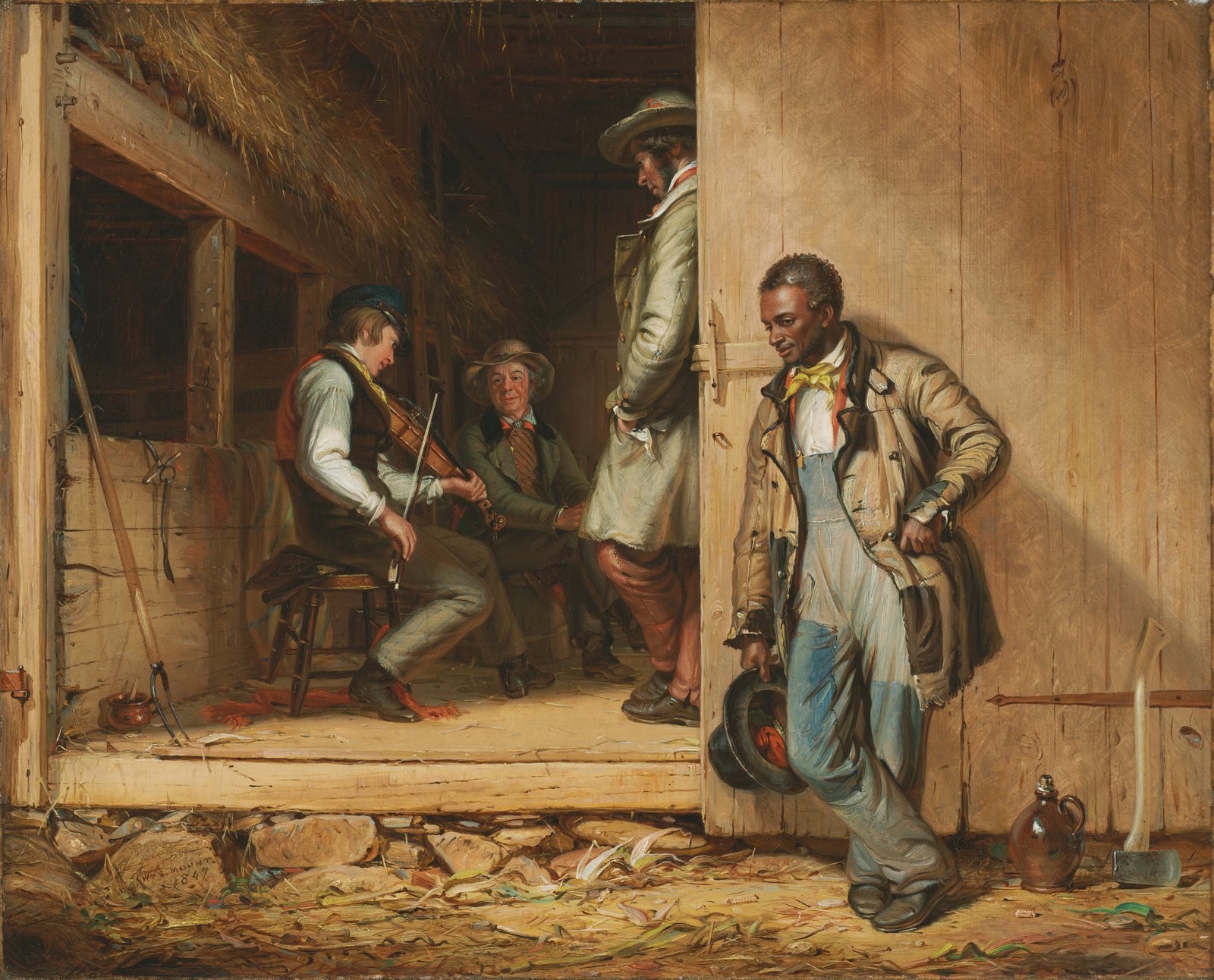
The Power of Music
William Sidney Mount
A fiddle tune reaches listeners on both sides of a barn doorway in William Sidney Mount's Long Island scene. Their shared attention suggests music's capacity to connect people, but the Black laborer remains outside while white men occupy the interior. The painting holds that pleasure and separation together instead of allowing one to cancel the other.
Read the story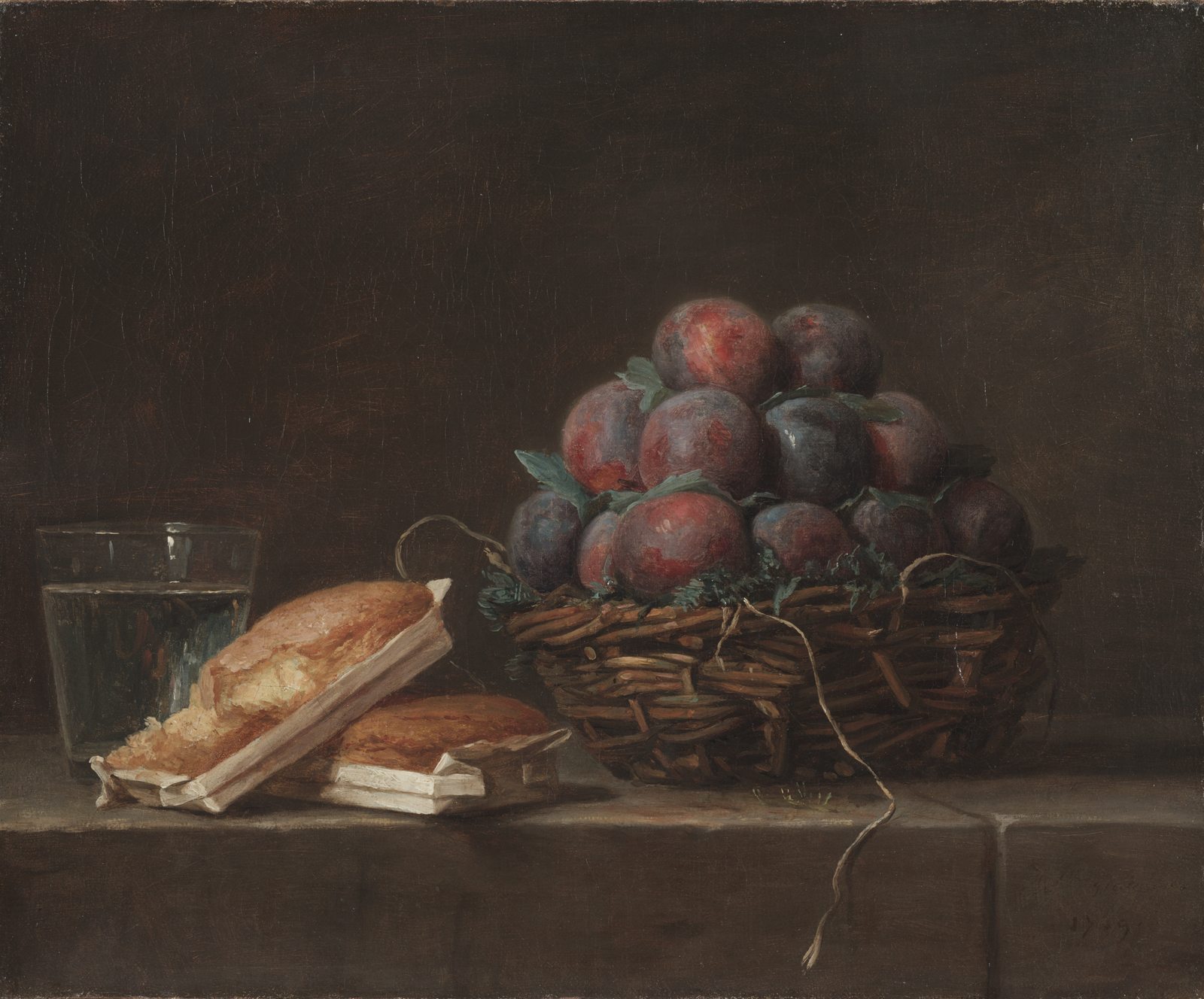
Basket of Plums
Anne Vallayer-Coster
Anne Vallayer-Coster turns plums, cakes, and water into a study of surfaces: dusty fruit skins, woven fibers, crisp paper, and transparent glass. Fruit still lifes were popular in eighteenth-century France, but this modest arrangement rewards close attention. A broken cake and trailing strands beneath the basket make the objects feel recently handled rather than perfectly staged.
Read the story