The story behind the painting · 3 min read
Madame X (Virginie Amélie Avegno Gautreau)
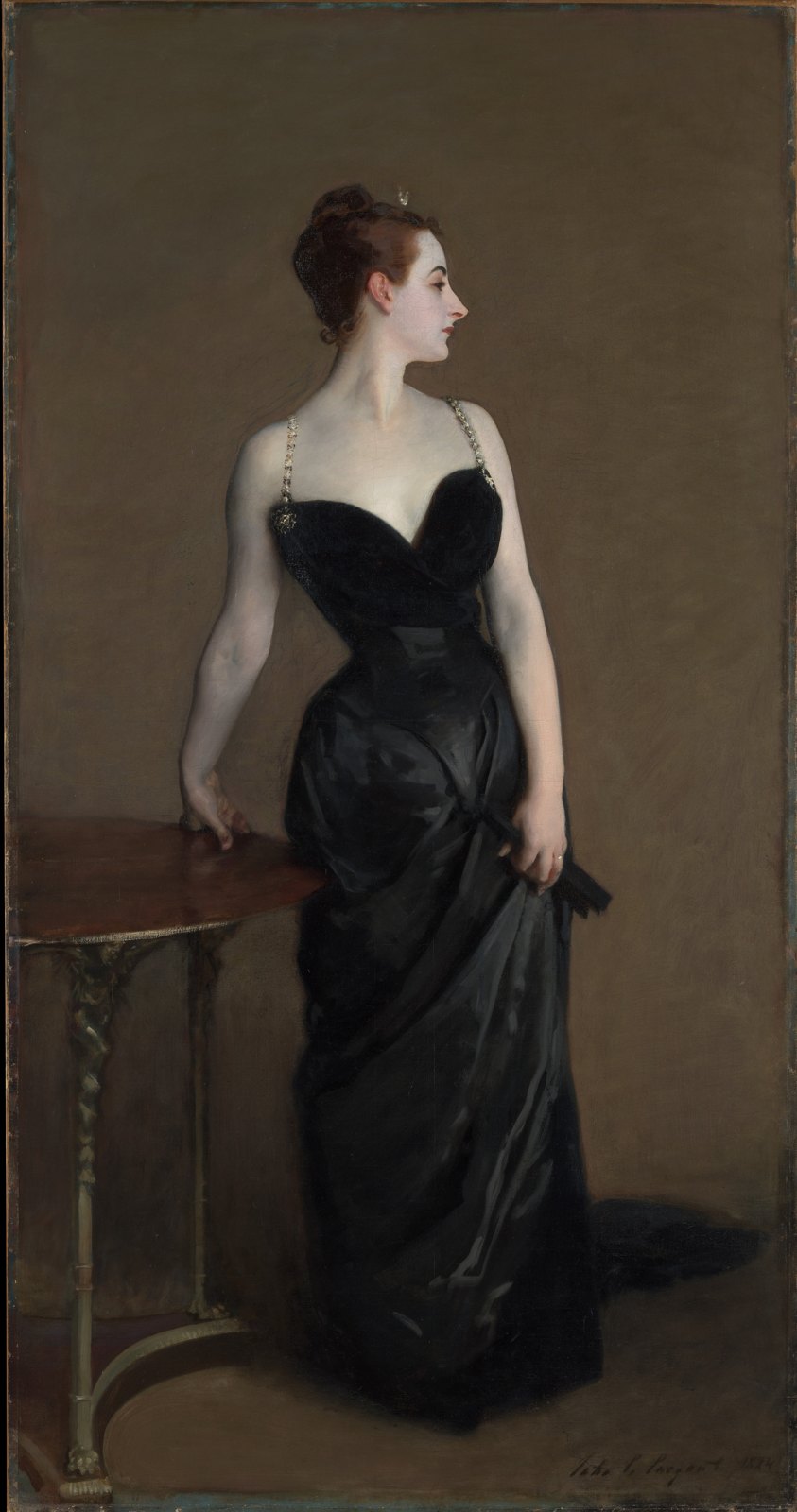
Sargent painted Virginie Gautreau without a commission, hoping her striking appearance would advance his reputation. The portrait instead drew ridicule at the Paris Salon of 1884. He later raised a fallen shoulder strap and kept the canvas for decades; its disciplined silhouette still makes the sitter’s carefully fashioned appearance feel formidable.
The story
The dress is nearly black, the skin startlingly pale, and the background offers almost nothing to soften the encounter. Gautreau’s head turns sharply away, exposing a long profile and neck. Her body faces more toward the viewer, so the pose contains a controlled twist. Sargent gives us a conspicuous public appearance without the ordinary invitation of eye contact. The sitter is available to be seen, but she does not seem interested in meeting our gaze.
Virginie Amélie Avegno Gautreau was born in Louisiana and became known in Paris for her distinctive beauty and presentation. Sargent sought the portrait as an opportunity rather than accepting a commission. Both painter and sitter participated in the project, but its reception at the Salon of 1884 was hostile. The original painting showed one jeweled strap slipping off her right shoulder. Sargent subsequently repainted it in place, producing the more contained arrangement visible now.
The dress is not a single black shape. Its fitted upper section, narrow waist, and gathered skirt catch different amounts of light, with blue-gray and brownish passages separating fabric from shadow. At the lower right, the train spreads into a soft dark mass. Against that complexity, the bright skin appears almost uninterrupted. The hand resting on the table and the other hand gathering the skirt help hold the elongated figure in place. Small touches of jewelry punctuate a composition otherwise built from large areas of restraint.
Sargent retained the canvas for more than thirty years before selling it to the Metropolitan Museum, asking that the sitter’s name be concealed. The title Madame X carries that history of anonymity, although her identity is now part of the work’s story. The portrait’s scandal can easily dominate discussion, but its visual economy deserves equal attention. A turned face, two narrow straps, a table edge, and a few folds sustain an imposing full-length figure. Almost every detail contributes to the distinction between an ordinary human body and a public image assembled with exceptional care.
A closer look
Details worth noticing.
The right shoulder strap
Sargent originally painted the sitter’s right strap slipping down her arm. After the hostile Salon reception, he raised it onto the shoulder, changing a small but highly charged detail.
The black dress
Gray highlights separate the fitted bodice from the gathered skirt. The dress depends on subtle variations within darkness, while the pale skin creates the painting’s much more immediate contrast.
The turned profile
Her head turns away from the direction of her torso, creating a taut line through neck and shoulder. The absence of eye contact makes her conspicuous appearance feel deliberately reserved.
Sources & image credits
Explore the museum’s research and collection record.
Arthur Hoppock Hearn Fund, 1916 · CC0 · Original museum image