The story behind the painting · 3 min read
The Harvesters
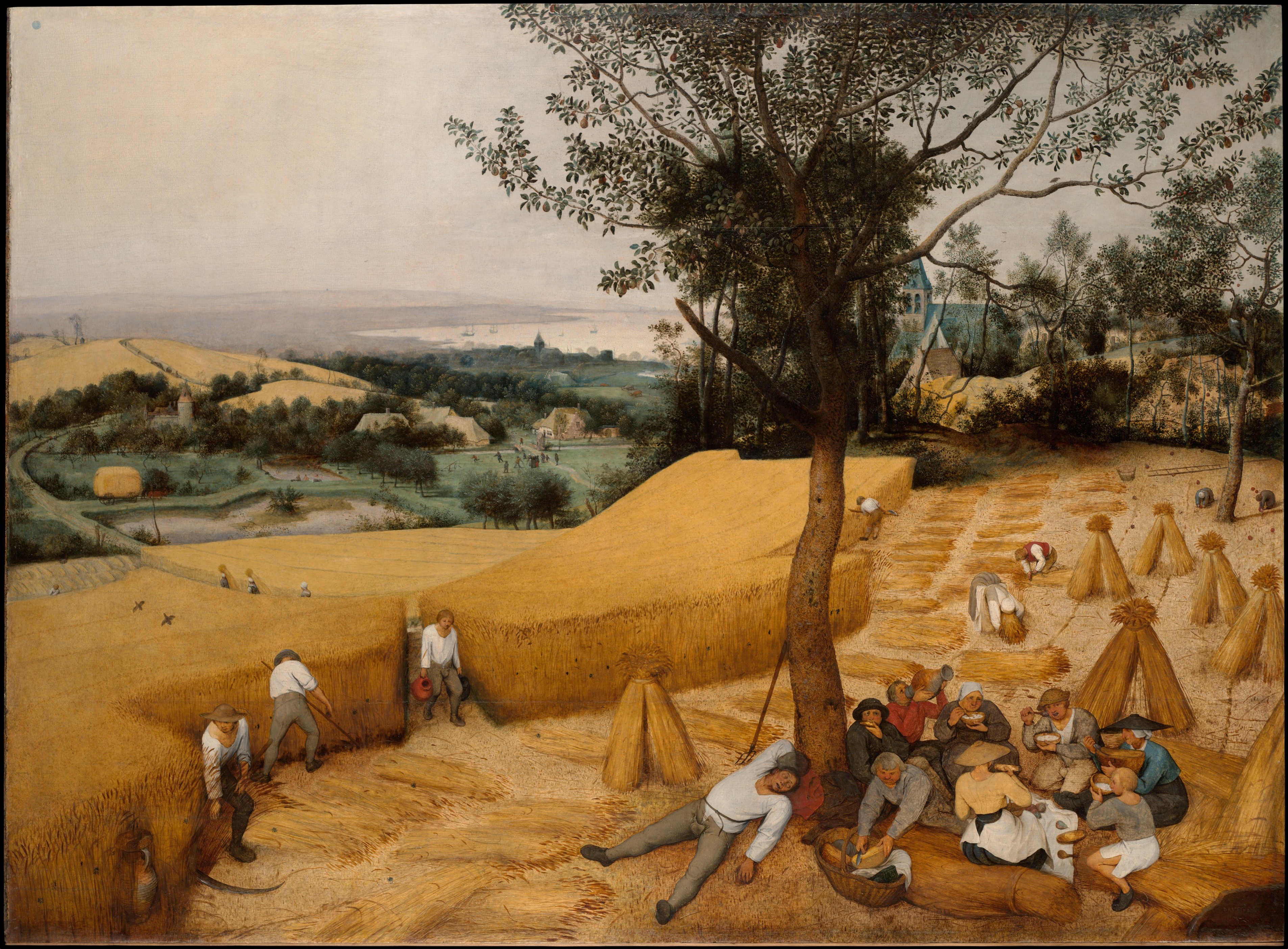
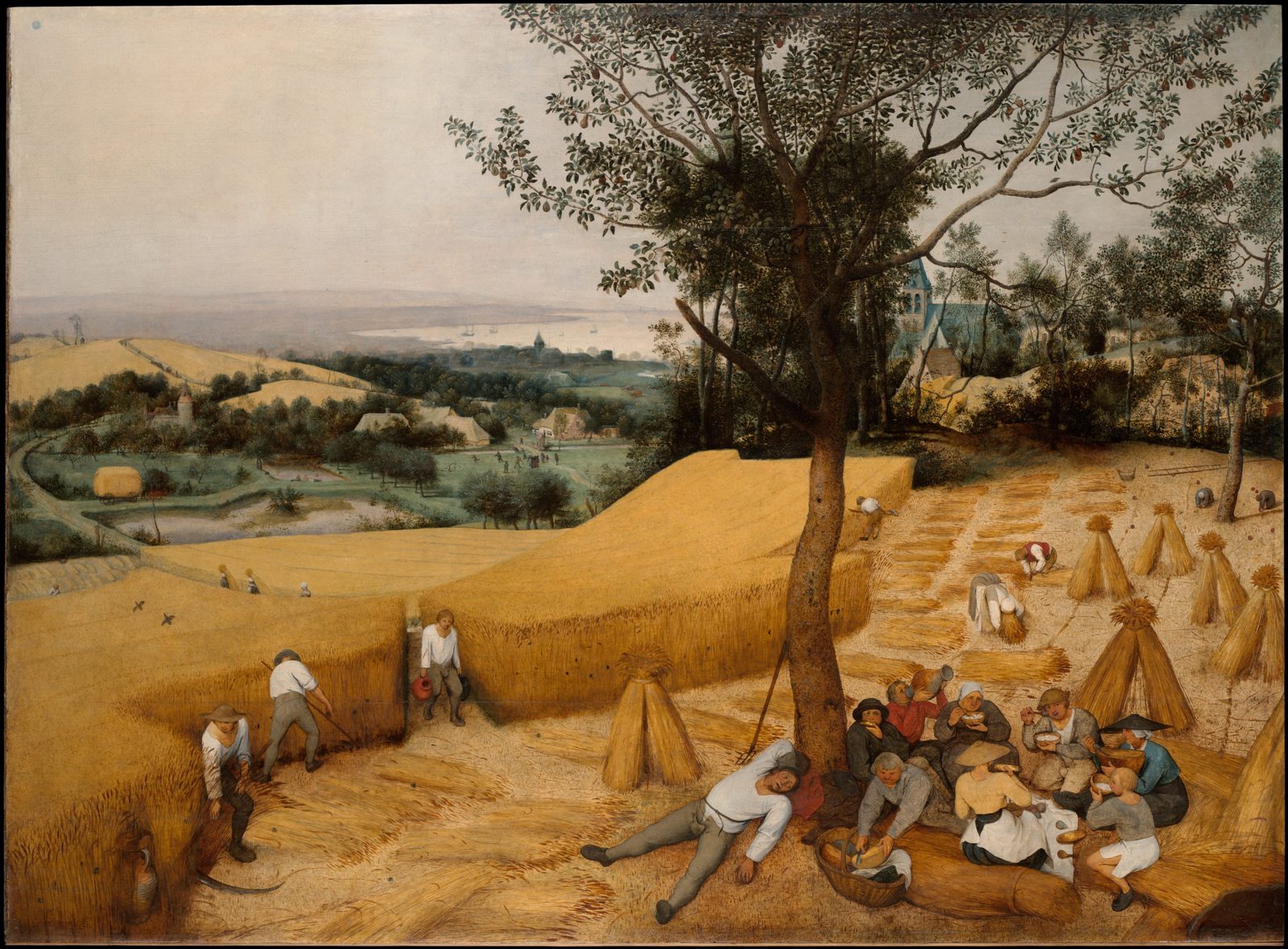
Bruegel’s harvest scene belonged to a cycle of the seasons made for a merchant’s dining room. Workers cut wheat, eat, and sleep in a landscape of summer abundance. Painted in 1565, it gives rural labor an absorbing human presence while presenting a notably harmonious view for the pleasure of a wealthy urban patron.
The story
One man sleeps beneath the tree while others eat, and a few steps away the cutting continues. That overlap of work and rest makes the scene feel larger than any single action. Bruegel gives the foreground bodies weight and individuality, then lets the landscape open into a distance filled with smaller activities. The picture is crowded with evidence of human use, yet its broad golden field and pale horizon keep it from feeling cluttered.
The painting dates to 1565 and belonged to a six-part seasonal cycle commissioned by an Antwerp merchant for the dining room of his country house. This scene represents the heat and harvest of July or August. Its original setting matters: food was being consumed beneath an image of people producing it. The laborers are treated with sympathy, but the countryside is also arranged as an abundant, relatively harmonious world for a prosperous patron to enjoy.
The tree is both shelter and organizing device. Its trunk separates the open field from the resting group, and its canopy gathers the figures into a shaded pocket. The reclining man stretches diagonally across the ground, slowing the scene with the sheer length of his body. Beyond him, upright bundles of grain echo the shapes of bent workers. Pale shirts punctuate the gold, allowing individual actions to remain legible even where figures are small.
Bruegel continually changes the scale of attention. The near meal is close enough to distinguish postures and bowls; farther away, people become dots and strokes among roads, fields, and water. The land does not stop at the harvesters’ immediate task. It seems to continue through other kinds of activity and into a hazy distance. That breadth is part of the painting’s appeal, but also part of its selectivity. Exhaustion appears as a restful nap, and the demands of agricultural work become an intelligible rhythm of cutting, gathering, eating, and sleeping. The image makes that rhythm persuasive without giving us the whole reality of rural life.
A closer look
Details worth noticing.
The sleeping worker
The reclining man’s stretched body interrupts the upright rhythm of workers and sheaves. His rest makes the harvest feel like a sustained cycle of exertion and recovery, rather than one action.
The dining group
The meal would have echoed the painting’s original setting in a merchant’s dining room. Rural food production and wealthy consumption were brought together through the subject and its location.
The golden field
The uncut wheat forms a broad, nearly continuous band, while the harvested area breaks into short marks and bundles. Different textures make the progress of the work visible across the ground.
Sources & image credits
Explore the museum’s research and collection record.
Rogers Fund, 1919 · CC0 · Original museum image