The story behind the painting · 3 min read
The Power of Music
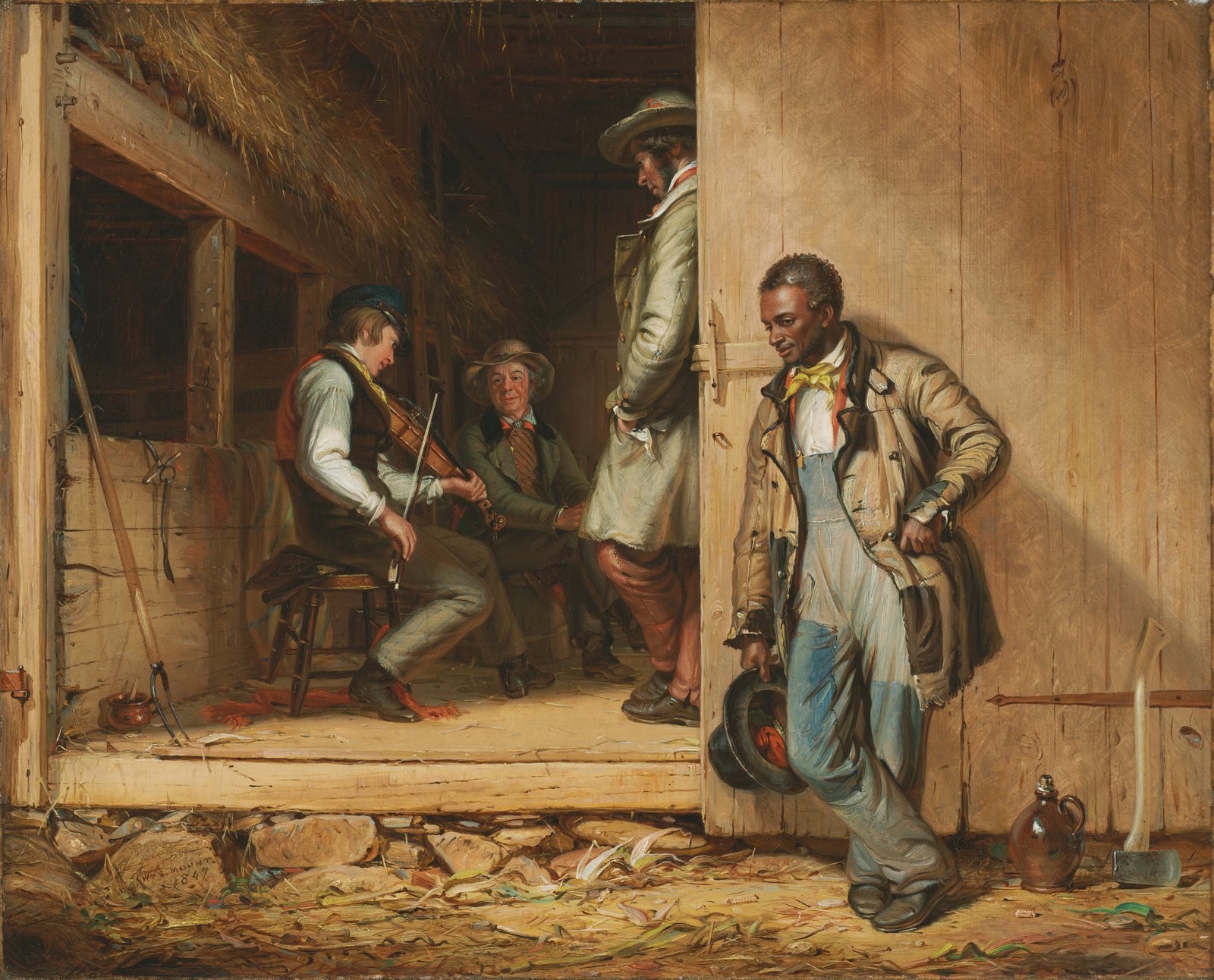
A fiddle tune reaches listeners on both sides of a barn doorway in William Sidney Mount's Long Island scene. Their shared attention suggests music's capacity to connect people, but the Black laborer remains outside while white men occupy the interior. The painting holds that pleasure and separation together instead of allowing one to cancel the other.
The story
A broad wooden door divides the painting near its center. On one side, a white fiddle player and two companions gather in the dim barn. On the other, a Black laborer stands in brighter light, his head inclined toward the sound. The tune is invisible, but each figure's relation to it helps make its presence felt across the scene.
Mount set the picture in rural Long Island before the Civil War. The listeners' common pleasure does not remove the racial boundary expressed through their positions. One man hears from outside while the others enjoy the interior together. The door is open, yet it still separates. That distinction is central to the work: an opening can allow sound to pass without making the social space on either side equal.
The musician sits low, with the instrument held against his chest and the bow extending across his body. A seated companion listens close by; another man stands near the doorway. Outside, the laborer's relaxed stance and attentive face make him more than a passing accessory. His figure is large and clearly lit. The composition gives his response considerable weight even while showing the distance between him and the group producing the music.
Mount was himself an accomplished fiddler and patented a design for the instrument. His interest in music therefore had a practical dimension. In the painting, small changes of posture stand in for sound: a tilted head, a resting arm, the player's absorbed position. These different responses prevent the scene from feeling like a group posed for a single instant. Attention moves among bodies that share an activity without occupying the same place.
The rough threshold and scattered objects keep the setting grounded in work. This is a pause within an ordinary rural environment, not a concert hall arranged for an audience. That informality makes the separation more striking. The picture does not need an explicit confrontation to show a social division; it is already built into where people stand. Its title proposes a connecting force, while its architecture makes the limits of that connection plainly visible.
A closer look
Details worth noticing.
The open door
The open barn door permits the music to reach the outside listener while still dividing the figures. Physical openness does not remove the unequal social arrangement expressed by their positions.
The outside listener
The Black laborer receives bright light and a substantial place in the composition. His attentive posture makes his experience central even though he remains outside the group in the barn.
The fiddle player
Mount was an accomplished fiddler who patented an instrument design. His practical knowledge helps explain the painting’s close attention to how playing and listening register in the body.
Sources & image credits
Explore the museum’s research and collection record.
Leonard C. Hanna Jr. Fund · CC0 · Original museum image